
- Alaska
- Arizona
- Arkansas
- California
- Colorado
- Connecticut
- Delaware
- Florida
- Georgia
- Hawaii
- Idaho
- Illinois
- Indiana
- Iowa
- Kansas
- Kentucky
- Louisiana
- Maine
- Maryland
- Massachusetts
- Michigan
- Minnesota
- Mississippi
- Missouri
- Montana
- Nebraska
- Nevada
- New Hampshire
- New Jersey
- New Mexico
- New York
- North Carolina
- North Dakota
- Ohio
- Oklahoma
- Oregon
- Pennsylvania
- Rhode Island
- South Carolina
- South Dakota
- Tennessee
- Texas
- Utah
- Vermont
- Virginia
- Washington
- West Virginia
- Wisconsin
- Wyoming
How to Conduct an Alabama Business Entity Search
Page Navigator
- How to Conduct an Alabama Business Entity Search
- Allowable Entity Types in Alabama
- Why Search for an Alabama Business Entity
- How to Search for Business Entities
- EntityCheck Business Background Check Goes Further
- Alternative Resources Beyond the SOS (Secretary of State) Search
- How to Find the Owner of a Business Entity in Alabama
- Additional Resources for Business Ownership Info
- Types of Owners and Their Roles
- Red Flags to Look for When Searching Business Entities
- Best Practices When Reviewing Business Entity Records
- How to Register an Entity in Alabama
- How Much Does It Cost to Start a Business in Alabama?
- FAQs
- EntityCheck in US States

The last official count of registered businesses by the Alabama Department of Revenue was in 2023. The report totaled 260,974 registered business licenses, which reflects a significant increase (15%) over the past few years. Additionally, the U.S. Small Business Administration reports that there are more than 422,000 small businesses in Alabama, representing roughly 99.4% of all businesses in the state. Between March 2021 and March 2022, 15,298 new establishments opened, while 9,782 closed, resulting in a net increase of 5,516 businesses.
Registering a business in Alabama offers several advantages, such as a low-tax, pro-business climate, including tax incentives, abatements, and no annual report filing fees. Businesses benefit from a streamlined online registration process, personal liability protection, and robust support from resources like the Alabama Small Business Development Center.
Tax incentives include abatements on sales, use, and property taxes for qualifying projects. There are also tax credits available, including the Alabama Small Business and Agribusiness Jobs Act Credit. The registration process is straightforward, with options to file online with the Secretary of State. Alabama does not require an annual report filing fee. The state also offers robust business support through the Alabama Small Business Development Center and the Small Business Administration, which provide training, counseling, and resources.
Alabama features a strong, diverse industrial base and advanced logistics, including a major seaport, making it a desirable location for new businesses. Some of the most prominent types of businesses there are in automotive (major manufacturers including Mercedes-Benz U.S. International, Hyundai, and Honda), aerospace and defense (supported heavily by companies around the Redstone Arsenal), agriculture and forestry (the state ranks high in timberland and poultry, greenhouse and nursery products), healthcare and education (e.g., University of Alabama in Birmingham), manufacturing and logistics (with significant activity in steel products, lumber, plastics, and ship building).
Some of the smaller types of businesses are in food preparation and service, retail and tourism, and professional services, including consulting and financial services.
Allowable Entity Types in Alabama

Alabama allows a variety of business types, overseen by the Secretary of State, including for-profit and non-profit corporations, Limited Liability Companies (LLCs), Limited Partnerships (LPs), Registered Limited Liability Partnerships (LLPs), and Limited Liability Limited Partnerships (LLLPs). These structures provide varying levels of liability protection and taxation, ranging from sole proprietorships to formal corporate structures.
The most common business entity types in Alabama are limited liability companies and sole proprietorships. LLCs are chosen for their personal liability protection, while sole proprietorships are the most common due to their simplicity and ease of setup. Other frequent entities include Corporations and Partnerships.
Why Search for an Alabama Business Entity
Searching for an Alabama business entity through the Secretary of State's office is essential to verify a company's active status, check authorized agents for legal processing, ensure the business name is available for registration, and review the entity type, structure, and filing history. It is a critical step in due diligence, legal compliance, and research on potential business partners or competitors.
Some of the reasons to search for an Alabama business entity include:
Key Reasons to Search Alabama Business Entities:
Verify Business Status: Confirm if a company is active, dissolved, or in good standing with the state.
Locate Registered Agents/Officers: Identify the authorized agent or incorporator for legal or official communication.
Check Name Availability: Ensure a desired business name is not already in use by another entity.
Due Diligence: Research partners, vendors, or competitors to confirm their legal structure (LLC, Corporation, Partnership) and history.
Access Public Records: Retrieve filed documents for legal, tax, or business planning purposes.
Find Official Information: Get crucial details like the physical address, officers/members, and incorporation dates.
Confirm Compliance: Ensure the business meets state requirements by reviewing its official records.
Legal Compliance: To ensure your chosen name meets state requirements (e.g., includes "LLC") and to check if a name is already too similar, preventing future legal issues.
Trademark Check: See if a name is already trademarked in the state.
Identify Officers and Directors: You can search for the names of officers or directors associated with a business entity.
Confirm a Business's Legal Structure: This search confirms the specific legal entity type, such as an LLC, corporation, or limited partnership, as it appears on file with the state.
Research Competitors: It is a valuable tool for researching other businesses in the state for various purposes.
Find Legal Information: The search can provide information on a business's past names, managers, and other public filings.
Performing Due Diligence: To research potential partners, suppliers, or competitors, and to check the legitimacy of a company before investing.
Market Analysis: To understand the competitive landscape by reviewing existing businesses in a particular industry.
Track Your Own Business Registration: You can also use the search to find details about a business you already own, such as its registration number or filing history.
Ensure Tax Compliance: A unique business name is crucial for tax purposes, as it ensures your business is correctly identified and associated with its tax obligations.
Investigate Potential Partners or Competitors: Researching a company can help you understand its history, structure, and regulatory compliance before making a business decision and jeopardizing your own company.
Name Reservations: To see if a preferred name is available to be reserved for a limited time, which can help secure a domain name and other branding elements while preparing to register the business formally.
Before Investing: Conducting thorough due diligence when acquiring or investing in a business.
How to Search for Business Entities

Generally, access to business entity records helps confirm their legitimacy and legal existence. In addition, it promotes transparency, helping protect consumers and investors from fraudulent business entities. To search for Alabama business records, visit the Alabama Secretary of State's website and choose from the available search options.
The platform offers different search options, including:
Entity Name: Search by entity name requires the full or partial name of the business entity
Entity Number: Accessing business entity records using the entity number requires the nine-digit identification number assigned to all businesses at registration
Officer/Agent/Incorporator: Access to business entity records using this criterion requires the complete or partial name of the officer, registered agent, or individual who registered the entity
Reservation/Registration by ID: Use this search field to access business records using the reserved name registered with the Alabama Secretary of State before the business was duly registered.
What Information Can You Find with the Secretary of State?
After choosing your preferred search criteria, enter the relevant information, such as the entity name or number, the incorporating agent, or the business reserved name. The result displays a list of entity names, nine-digit entity IDs, cities, company types, and business statuses that match the search criteria.
The Alabama Secretary of State's website generally offers the following services and information, including:
Business Forms: Contains all forms required to register various types of business entities.
Business Entities: Information about the operations of the Business Entity Division.
Online Services: Access to all online services provided by the Alabama Secretary of State.
Domestic Corporations: Access to relevant forms to file a domestic corporation or domestic nonprofit entity.
Foreign Corporations: Contains information on foreign corporations qualified to operate and how to register a foreign corporation in Alabama.
Homeowners' Associations: Information and documents required to file Homeowners' Associations entities.
Homeowners' Association Electronic Database: Online access to business entity records on Homeowners' Associations registered in the state.
Homeowners' Association FAQs: Frequently asked questions on registering a Homeowners Association in Alabama.
LLCs: Filing a domestic or foreign limited liability company, fees, forms, and procedures.
LLPs: Registering a domestic or foreign limited liability partnership, including fees, filing procedures, and forms.
How to Access Detailed Information

Clicking on a business entity name in the list displays detailed information about the selected business. The accessible information includes:
Entity ID Number: Displays the nine-digit number assigned to the business entity at registration.
Entity Type: Specifies the type of business, such as Domestic Limited Liability Company, Domestic Corporation, Professional Corporation, or Nonprofit Corporation.
Principal Address: The physical address of the business.
Principal Mailing Address: The mailing address of the business entity.
Status: Refers to the current state of the business (e.g., Dissolved, Exists, Name Reservation, Previous Name, Withdrawn, or Revoked).
Place of Formation: The county where the business was incorporated.
Formation Date: The date the business entity was registered.
Registered Agent Name: The person designated to receive legal documents on behalf of the business.
Nature of Business: Describes the legal structure, industry, and types of products or services the business engages in.
If you require further assistance searching for business entity records, contact the Alabama Secretary of State's office.
What Business Entity Information is Not Public

Through the Alabama Secretary of State, you can easily find entity names, numbers, registered agents, and filing histories. However, in Alabama, other items are confidential, non-public business entity information restricted from public view. Some of these things include specific financial statements, tax returns, and details related to ongoing criminal investigations. Furthermore, certain personal information about owners, such as private home addresses (if not used as the business address) or Social Security numbers, is generally not disclosed.
Some of the things that are not public in Alabama are:
Financial Records: Tax returns and detailed financial statements submitted to state agencies.
Investigation Data: Information related to active criminal investigations by state authorities.
Personal Information: While the names of entity officers, agents, and incorporators are public, specific, sensitive personal identifiers (such as Social Security numbers) for these individuals are not.
Trade Secrets: Formulas, processes, methods, or other proprietary information that derives economic value from not being generally known to the public and is the subject of reasonable efforts to maintain its secrecy.
Private Employee Medical Records: Medical and health insurance information.
Customer and Employee Identifying Information: Identifying information like Social Security Numbers, driver's license numbers, and passport numbers.
Revenue and Profit Numbers (unless a public company): Smaller companies that are not publicly traded can keep their financial data private.
Bank and Credit Card Data: Bank and credit card numbers, as well as loan information.
How to Find EIN and UCC Records in Alabama

To find EIN records in Alabama, use the Alabama Secretary of State's online database for entity information, or use federal resources like the IRS Tax Exempt Organization Search tool for nonprofits. While the state does not list EINs directly, they can be found through SEC filings for public companies, by requesting a W-9, or by searching commercial databases.
You can also use EntityCheck's EIN Lookup tool to find Alabama EIN records.
You can find UCC filings in Alabama primarily through the Alabama Secretary of State's Government Records Inquiry System online, which provides electronic access to UCC-1 and UCC-3 records. You can search by the debtor's name, the secured party, or the document number. For land-related records, check county probate records.
You can also try using EntityCheck's UCC Filings search tool to find UCC filings in Alabama.
How to Find DBA Records in Alabama
To find DBA (Doing Business As) or assumed name records in Alabama, use the Alabama Secretary of State's Government Records Inquiry System to search for registered trade names, entity names, or file numbers. This free, online database provides access to entity records, allowing you to identify the legal owner of a business, check for compliance, or verify a name's availability.
EntityCheck Business Background Check Goes Further

An even more insightful way to search for Alabama business entities and access additional information is to utilize EntityCheck's powerful search engine. Search quickly and easily by business name, EIN, owner, phone number, or email address. Along with the information above, you can dig deeper to find incredibly illuminating details such as:
 UCC Filings:
Discover Uniform Commercial Code (UCC) filings, showing creditors' attachment to business assets. These files provide insight into the organization's financial stability by examining its standing debt and the resulting risk. Also find lien details, creditor and debtor information, filing and expiration dates, and collateral and asset claims.
 Court Cases:
Evaluate a company's legal record to assess potential risks associated with its operations and identify any outstanding issues. Review bankruptcy filings, liens and judgments, federal court cases, litigation, and legal history of ongoing and past court cases.
 Licenses:
Verify business credentials, including licenses, permits, and government certifications, as well as the educational backgrounds of decision-makers, to assess credibility.
 Filing & Compliance:
Review a company's financial performance reports, DBAs (Doing Business As), and government Tax IDs.
 Trademarks & Patents:
Find out what intellectual properties a company controls and review the details of any trademarks and patents it holds.
 Registered Individuals:
Identify key decision-makers, registered agents, corporate officers, and leadership, even if this information is not readily available through official records.
Alternative Resources Beyond the SOS (Secretary of State) Search

Although the Secretary of State's office holds tremendous data for business entities, it is not the only resource. To conduct thorough due diligence, use all the resources at your disposal.
The following agencies may provide information regarding Alabama business entities:
Alabama Secretary of State (SOS): The Alabama Secretary of State is the state's chief election official, overseeing voter registration, election security, and campaign finance reporting. They oversee business filings (LLCs, corporations), maintain public records, authenticate documents with the Great Seal, and process commercial liens. The office serves as the chief election official, working with local officials to ensure secure elections and to certify election results. It also handles business registrations for new companies, reserving business names, and managing Uniform Commercial Code (UCC) filings. Another duty of the SOS is to file, store, and maintain official state records, including executive and legislative documents, and to authenticate official documents with the Alabama Great Seal. The Secretary of State is an elected official serving a four-year term.
Alabama Department of Revenue (ADOR): The Alabama Department of Revenue administers, enforces, and collects state taxes, including income, sales, use, motor fuel, and business privilege taxes. It handles motor vehicle titles, investigates tax fraud, and provides the My Alabama Taxes (MAT) portal for electronic filing and payments. ALDOR also manages tax debt collection and advises on tax policies. Some of its detailed tasks include managing individual, corporate, sales, use, lodging, and tobacco taxes. The office also oversees state and county business licenses, fuel taxes, and severance taxes, and collects delinquent taxes through liens, garnishments, and property seizures. The ADOR also investigates tax crimes and handles administrative appeals. A commissioner appointed by the Governor heads the department.
Alabama County Clerk Offices: In Alabama, county circuit clerk offices serve as the primary administrative, record-keeping, and financial arm for the local circuit and district court systems. They are responsible for managing court files, issuing subpoenas and warrants, collecting fines/fees, assisting with jury management, and acting as the county's absentee election manager. Other duties include maintaining, imaging, and providing public access to official court records and documents. They also collect and disburse court costs, fines, restitution, and child support payments. They assist with elections by serving as the county's absentee election manager, including processing applications and ballots. Sometimes they also handle passport applications and, in some jurisdictions, issue concealed carry permits. They are constitutional officers responsible for the integrity of court records and cannot provide legal advice.
Alabama Secretary of State Uniform Commercial Code: The Alabama Secretary of State Uniform Commercial Code (UCC) Office acts as the central filing office for secured transactions involving personal property, allowing creditors to file liens (UCC-1) and amendments (UCC-3) to establish public notice of interest in collateral. It maintains a searchable, public electronic database for business due diligence and compliance, with records accessible through the Government Records Inquiry System. This office also provides an online UCC Index for searching liens, which is critical for due diligence to determine if assets are already pledged as collateral. They store and manage official records related to commercial transactions, ensuring they are available for public, legal, or financial review. They offer online submission services for various UCC forms for efficiency, alongside traditional mail-in options. The office serves as a critical, central hub for lenders, businesses, and legal professionals to secure their rights and research existing liens on personal property (excluding real estate) across the state.
Alabama Public Utilities Alliance: The Alabama Public Utilities Alliance (APUA) functions as a legislative information service and support network for public and municipal utilities across Alabama. It represents various entities, including municipal water, wastewater, gas systems, gas districts, and municipally owned electric utilities. Its duties include legislative advocacy, information services, and a support network. It is important to distinguish the APUA from the Alabama Public Service Commission (PSC), which regulates the rates and services of privately owned utilities such as Alabama Power.
Alabama Attorney General's Office: The Alabama Attorney General's Office acts as the state's chief legal officer, responsible for enforcing state laws, representing Alabama in criminal appeals, and providing legal counsel to state agencies. Key functions include prosecuting public corruption, handling complex economic crimes, protecting consumer interests, and managing environmental or utility litigation. The office represents the state in all criminal cases before appellate courts. It handles habeas corpus proceedings in federal court, investigates and prosecutes public corruption, white-collar crime, and complex economic crimes. It also mediates disputes between consumers and businesses, enforces consumer protection laws, serves as the official legal advisor to state agencies, departments, and officers, and manages high-level litigation and files amicus briefs in important cases.
Alabama Department of Labor: The Alabama Department of Labor (soon to be Department of Workforce in Feb 2025) administers state labor laws, manages unemployment compensation, oversees workers' compensation for injuries, and enforces child labor laws. It provides job search assistance, career training, labor market data, and safety inspections for mining and boilers. The office provides financial assistance to eligible workers who have lost their jobs through no fault of their own and administers benefits for job-related injuries and occupational diseases. In addition to enforcing safety regulations, including inspections of mines and boilers, and monitoring compliance with child labor laws, the office also collects and analyzes data on employment and unemployment conditions in Alabama.
How to Find the Owner of a Business Entity in Alabama

Generally, the Alabama Secretary of State's Business Entity Records webpage provides detailed information, including the registered owner of a business entity. Typically, platform search results provide information about a business entity's owners, including the organizer's name and the names of its members. People seeking information about business owners can follow the steps outlined to obtain it. The steps to find an owner are as follows:
Visit the Secretary of State Website: Navigate to the official Alabama Secretary of State Business Entity Records page.
Search for the Entity: Select "Entity Name" to search for the company or use the "Officer | Agent | Incorporator" option if you know the owner's name.
Refine Search Criteria: Enter the entity name, then use the drop-down menus to narrow by city or entity type (e.g., LLC, Corp).
Review Entity Details: Click on the specific Entity Name or ID Number (in blue) to view the details page.
Examine Documents: Look for links to filed documents, such as the Articles of Organization, Articles of Incorporation, or Annual Reports. These documents contain the names of the organizers, members, managers, or registered agents.
Additional Resources for Business Ownership Info

In addition, the following resources may provide access to information on the owners of business entities in Alabama:
Local Chambers of Commerce: The Chambers of Commerce maintain directories of all businesses and their owners
City Business License Offices: Most Alabama cities and counties require businesses to obtain a local business license. These records typically include lists of owners' names and the persons responsible for the business.
Better Business Bureau (BBB): The BBB provides access to business listings in the United States, including Alabama. Visit BBB
Other Public Records: Utility providers and county or city tax assessors maintain records of business entities. Municipalities require business owners to register with utility providers, and tax offices maintain records of property taxes linked to business properties and their owners.
WHOIS Lookup: Perform a WHOIS search to find the owner of the business's domain name.
Professional Networks: Check sites like LinkedIn, which may list owners and key personnel.
The Business's Website: Many businesses have an "About Us" or "Leadership" page where the business owner may be mentioned. Note that some companies may refer to their owners as president, founder, or principal.
Types of Owners and Their Roles

In Alabama, common business entities include sole proprietorships, partnerships, LLCs, and corporations, with ownership ranging from a single owner to multiple members or shareholders. Key business roles are generally divided into executive (CEO), managerial (operations), and operational levels, all of which must be registered with the Alabama Secretary of State.
Types of Business Ownership in Alabama
Sole Proprietorship: Owned by one individual, the simplest form, where the owner holds all liability and profits.
Partnership: Two or more owners, including General Partnerships and Limited Partnerships (with one or more general partners liable for debts).
Limited Liability Company (LLC): Popular structure offering liability protection, managed by one or more members.
Corporation (C Corp/S Corp): A legal entity owned by shareholders, managed by directors and officers.
Nonprofit: Organizations are often subject to specific sales tax regulations.
Common Business Roles in Alabama
Owner/Founder: The individual(s) holding equity in the company (sole proprietor, partner, or member).
Executive (CEO/President): Responsible for high-level strategy and overall business success.
Operations Manager: Manages daily business operations.
Marketing Lead: Handles business promotion.
Financial Officer: Manages company finances.
Different entity structures have various roles and types of ownership. Some individuals who have control over a company may not hold a traditional role within it. Leadership is a crucial factor to understand before working with a company.
Some of the more conventional roles within companies include:
Shareholders (or Stockholders): They own the corporation by purchasing stock, which grants them voting rights to elect the Board of Directors and influence major corporate decisions.
Directors: Directors set the strategic course for the corporation, make major decisions, and oversee the conduct of the officers.
Officers: Officers, such as presidents (CEO) and secretaries, manage the day-to-day operations of the business and are hired and fired by the Board of Directors.
Members: Members are the owners of the LLC. They can also serve as managers or delegate management to others. Members are typically protected from personal liability for the company's debts.
Managers: Managers, whether members or non-members, are responsible for managing the business and affairs of the LLC.
General Partners: They manage the business affairs as outlined in the partnership agreement. General partners are entirely liable for all business debts and obligations.
Limited Partners: Limited partners have limited management rights. Their liability is typically limited to their investment in the business, providing them with some protection from business debts.
Red Flags to Look for When Searching Business Entities

When searching for Alabama business entities, critical red flags include a status of "Dissolved" or "Terminated" in the Secretary of State database, which indicates the business is no longer legally operational. Other warning signs include inconsistent, missing, or self-produced financial records, indicating poor bookkeeping or potential fraud. Unpaid taxes, lack of proper licenses, and the use of restricted words (e.g., "Bank", "Trust", "Insurance") without proper authorization are also major red flags.
Some general red flags to look for include:
No Professional Website: May indicate an unprofessional or less established business, though not always a red flag.
Lack of Professional Affiliation: A business that is not affiliated with industry organizations may be less reputable or less established.
Negative Customer Reviews: Consistent negative feedback can highlight issues with the business's products, services, or customer relations.
Poor News Coverage: Negative press can signal significant problems, such as legal issues, financial troubles, or operational failures.
Some more serious red flags to be aware of include:
Entity Status Problems

Common business entity violations in Alabama frequently involve failing to file or update beneficial ownership information under the new Corporate Transparency Act, neglecting to file annual business privilege tax returns, and improper licensing. Other prevalent issues include inadequate insurance coverage, operating with insufficient funds (bad checks), and violations of labor regulations, particularly child labor laws.
A status of "Dissolved" or "Terminated" indicates the entity is no longer active and has ceased operations. Using forbidden words such as "Bank", "Trust", "Insurance", "Electric", or "Engineering" in the name may indicate unauthorized operations or a fraudulent company. A lack of up-to-date annual reports or other mandatory filings with the Alabama Secretary of State indicates non-compliance. Always conduct proper due diligence before engaging with an Alabama company.
Inconsistent or Suspicious Information

Look for inconsistent or suspicious information. Mismatched details between the Secretary of State's database and other sources, like the business's website or social media, can indicate a lack of transparency or organization.
Be cautious about frequent changes to the address or registered agent, as this may indicate instability or an attempt to evade service of process. If the company has no physical address, only a P.O. box, walk away.
Ownership and Management Concerns

It's not always possible to locate owner information in Alabama. Vague or confusing ownership indicates a red flag.
The most common employment lawsuits in Alabama involve workplace discrimination, wrongful termination, sexual harassment, and wage-and-hour violations. As an "at-will" state, Alabama employers often face lawsuits regarding discrimination based on race, gender, disability, or religion, alongside retaliation claims for exercising legal rights like filing workers' compensation claims.
How a company manages operations and its people says a lot. Poor management can start at the top and spread to the lowest levels, affecting all parts of the company. This is a huge red flag to watch out for.
Other red flags related to sketchy ownership or management tactics include employees or individuals associated with the company living beyond their apparent income. Frequent employee turnover or constant complaints about specific personnel are other significant concerns. Pay close attention to how the company is managed. A lack of segregation of duties or inadequate financial oversight could lead to significant financial issues.
Financial and Legal Warning Signs

Financial red flags are the most important to watch for, as they can affect your company's reputation and result in significant losses. Some things to watch out for are:
Inconsistent Financials: Discrepancies among tax returns, bank records, and profit-and-loss statements may indicate financial instability.
Missing Documentation: An inability to produce key documents, such as tax filings or certificates of formation, is a major warning sign.
Suspicious Cash Flow: Unusual or unauthorized cash withdrawals/disbursements suggest internal fraud.
Compliance Gaps

Common business compliance violations in Alabama include failing to manage payroll and sales tax obligations, violating OSHA safety regulations (especially regarding blocked exits and electrical panels), and breaches of the Alabama Deceptive Trade Practices Act (ADTPA). Other frequent issues include failing to properly classNameify employees, violating child labor laws (e.g., by allowing minors to work long hours), and inadequate insurance coverage.
Business Purpose and Industry Red Flags

Fraudulent companies in Alabama often operate through deceptive consumer schemes, investment fraud, and business-to-business scams. Common types include fake charity solicitations, investment/cryptocurrency scams (including "pig butchering" scams), illegal debt collection, healthcare/Medicare fraud, and identity theft schemes. These entities frequently target elderly residents and utilize high-pressure tactics or online platforms to obtain funds illicitly.
For example, the entity's name may not accurately reflect its purpose or structure (e.g., calling a business "Automotive Repair" when its purpose is "Landscaping").
Connections & Affiliations

A company's connections and affiliations can tell quite a story. Sometimes one person runs multiple dissolved/failed companies. Look for recurring patterns of dissolution followed by new formation. That is a significant indicator of potential fraud. One thing to be cautious of is a company with ties to organized crime figures and politically exposed persons (PEPs). If the company makes a concerted effort to conceal its actual owner or person in charge, that should be a clear warning to stay away.
Some red flags in broader business records include the following:
Inconsistent Public Records
Company filings don't match what's listed in:
Court records
Tax records
Property ownership filings
An example is that the registered address differs from the address listed in lawsuits or liens.
Poor Record-Keeping
Missing meeting minutes (for corporations).
No updated ownership/member list for LLCs.
Lack of transparency in accounting records.
Regulatory Issues
Fines, sanctions, or loss of licenses with state agencies.
Businesses flagged by the Better Business Bureau or the Attorney General's office.
Unusual Patterns
Very recent incorporation with sudden high activity.
Foreign entities registered but not compliant with local laws.
Shell-company indicators (multiple entities tied to the same registered agent at the same address).
Best Practices When Reviewing Business Entity Records

Utilize the best practices outlined below to maximize the benefits of your research. A business background check can take time, but it can yield a wealth of information that could help you avoid any costly mistakes.
Cross-reference everything.
Compare the UCC filing data with records from litigation and bankruptcy courts. Look for discrepancies between the documents.
Check annual reports for consistency year-over-year.
Research the owners of a company to detect possible bankruptcies, felonies, fraud, and other legal issues that could affect your business.
Use business verification services or business background reports from EntityCheck.
Keep in mind the context. For example, a single lien may not be alarming, but multiple filings, lawsuits, and frequent leadership turnover together signal real risk.
How to Register an Entity in Alabama
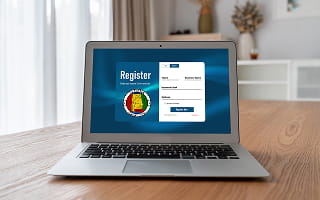
Selecting a business entity name in Alabama requires thoughtful planning and strict compliance with state laws. Generally, individuals planning to register a business entity in Alabama may utilize the Business Entity and Name Search to check the availability of the business entity name they wish to register.
To set up a business entity in Alabama, first identify the type of business you want to start and determine the legal structure that best suits it. In Alabama, your options are as follows:
Name Availability Check
Sole Proprietorship: Best for small-scale entities owned and operated by a single individual.
Partnerships: Ideal for businesses with multiple owners.
LLCs: Best suited for small and medium-scale businesses seeking liability protection and tax benefits.
Corporations: Ideal for entities planning to issue stock or attract investors
Nonprofit: Formed for charitable, educational, or religious deeds rather than profit-making.
Foreign Entities: Entities formed outside Alabama but transact business within the state.
Generally, setting up a business entity in Alabama requires intending business owners to take the following steps:
Choose a business name and reserve the same by filing the Name Reservation with the Secretary of State.
Designate a registered agent.
File the certificate of formation documents with the Alabama Secretary of State.
Obtain a business license or permit from the county probate judge in the locations where the business intends to operate.
Obtain an Employer Identification Number (EIN) for the business from the Internal Revenue Service (IRS).
Register for a tax account with the Alabama Department of Revenue for state tax obligations.
Obtain the necessary insurance coverage for the business from the Alabama Department of Insurance.
How Much Does It Cost to Start a Business in Alabama?

The cost to register a business in Alabama varies by business entity type. Generally, the filing fees are as follows:
Certificate of Formation for Domestic Entities: $200
Certificate of Formation for Foreign Entities: $150
General Partnerships: $100
Business Name Reservation (Paper Form): $25
Business Name Reservation (Online): $28
Annual Renewal Fee for Professional Associations: $100
Late Renewal Fee (after Nov 1 +30 days): $150 total ($100 + $50 late fee)
All corporations must obtain a name for their business entity before formally registering it. Typically, it costs $25 for name reservations submitted on paper and $28 for name reservation applications submitted online. In addition, there is a $100 annual renewal fee for professional associations. Professional association filing renewals submitted 30 days after November 1 of any year incur an additional $50, bringing the annual renewal fee to $150.
When naming your new company, you must follow Alabama's strict naming guidelines. Alabama business naming guidelines require that company names be unique, distinguishable from existing entities in the state, and include specific entity designators (e.g., "LLC" or "Inc."). You must obtain a Certificate of Name Reservation from the Secretary of State before filing, and the name cannot imply a purpose different from the formal, registered business activity.
The Key Requirements and Rules
Distinguishable Name: The name must be unique. Simply changing punctuation, articles (a, an, the), or entity designators (e.g., swapping LLC for Inc.) is not considered distinguishable.
Entity Designators:
LLC: Must include "Limited Liability Company", "L.L.C.", or "LLC".
Corporation: Must include "Corporation", "Incorporated", "Inc.", or "Corp."
Others: Limited partnerships must include "LLLP" or "L.L.L.P.", and professional corporations must include "P.C." or "PC".
Restrictions:
Names cannot contain words that sound identical to existing businesses, even if spelled differently.
Prohibited words related to banking, finance, or insurance may require special permission.
The name cannot imply it is a government agency (e.g., "State", "Federal", "FBI").
Registered Agent: A registered agent must be appointed for legal service of process.
FAQs
- How do I look up who owns an LLC in Alabama (members vs. managers)?
To look up who owns or manages an LLC in Alabama, search the Alabama Secretary of State (SOS) Business Entity Records database online using the company name. Review the "Articles of Organization" or annual filings within the search results for listed members (owners) or managers.
- How can I find a corporation's officers and directors in the state?
To find a corporation's officers and directors in Alabama, search the Alabama Secretary of State's Government Records Inquiry System. Use the entity name or number to access records, which often list organizers, members, and officers. While annual reports are no longer filed as of late 2024, the database provides current formation documents, amendments, and registered agent information. You can also use EntityCheck to find a company's directors, executives, associates, and more.
- Are business owners' names public or private in Alabama?
In Alabama, business owners' names can be kept private in the public record for Limited Liability Companies (LLCs), but they are generally public for sole proprietorships and certain other business types.
- Where do I search official business records in the state?
You can find official business records in Alabama, such as corporation, LLC, and business entity filings, through the Alabama Secretary of State's online Government Records Inquiry System. Users can search by entity name, number, or registered agent, as well as for Uniform Commercial Code (UCC) forms.
- How do I check if a business name is available or reserved in Alabama?
To check if a business name is available or reserved in Alabama, use the free Business Entity Search tool on the Alabama Secretary of State's website. Search by "Entity Name", and if the name is unavailable, it is already registered. Name reservations can be made online for approximately $25-$28.
- How can I view recent filings (Articles, amendments, mergers, annual/biennial reports) for a company in Alabama?
You can find recent filings for Alabama companies, including articles of incorporation, amendments, mergers, and annual reports, for free through the Alabama Secretary of State's online Government Records Inquiry System. Navigate to the search page, choose your search option, then review the results. Click on any entry for more details.
- How do I get a Certificate of Good Standing/Existence in Alabama?
To obtain a Certificate of Good Standing (or Certificate of Existence) in Alabama, order it online through the Alabama Secretary of State website by searching for your business entity, or via the Alabama Department of Revenue for a Certificate of Compliance. The cost is typically around $25 (plus processing fees) through the Secretary of State or $10 plus a $4 fee for the Department of Revenue.
- How do I obtain certified copies of formation documents and amendments in the state?
Certified copies of formation documents (Articles of Organization/Incorporation) and amendments in Alabama may be obtained from the Alabama Secretary of State by mail, fax, or in person for roughly $5.00 per document, plus $1.50 per page. Requests are processed in 5-8 business days, with expedited options available, or by using their online Document Copy Request form.
- How do I search UCC (Uniform Commercial Code) liens against a company in Alabama?
To search for Uniform Commercial Code (UCC) liens against a company in Alabama, use the Alabama Secretary of State's Government Records Inquiry System online. You can perform an "Advanced Search (with Images)" to view filed financing statements, ensuring you use the exact legal name of the business. You may also use EntityCheck's UCC Filing tool to find liens.
- What are the steps to register an LLC in Alabama (forms, fees, timeline)?
Registering an LLC in Alabama involves reserving a business name ($25), filing a Certificate of Formation ($200 + $11-$100+ processing) with the Alabama Secretary of State, and appointing a registered agent. Online filings are approved in 1-3 business days, while mail takes 1-2 weeks. Some key steps include drafting an operating agreement, obtaining an EIN, and filing an initial tax return.
- What are the steps to incorporate (C-Corp/S-Corp) in Alabama?
Incorporating a C-Corp or S-Corp in Alabama involves reserving a unique business name, appointing a registered agent with a physical Alabama address, and filing a Certificate of Formation with the Secretary of State (online or with the local probate judge). Costs include a $25-$28 name reservation fee and a state filing fee of $ 200 or more.
- Do I need a registered agent in the state, and who can serve as one?
Yes, every LLC, corporation, and foreign business entity is required by Alabama law to maintain a registered agent with a physical street address in the state to receive legal documents and official government correspondence. The agent must be available during normal business hours to accept service of process. The registered agent can be an individual, the business owner, an employee, or a professional service.
- What annual reports, franchise/margin taxes, or license renewals are required in Alabama?
As of October 1, 2024, Alabama corporations are no longer required to file an annual report with the Secretary of State. However, businesses must still file an annual Business Privilege Tax Return (Form CPT, PPT, etc.) with the Department of Revenue (ADOR). Additionally, many business tax licenses require annual renewal through My Alabama Taxes (MAT).
- How long does state approval take in Alabama, and are expedited options available?
In Alabama, state approval for business entity formation (like an LLC) typically takes 3-5 business days when filed online with the Secretary of State, though mail-in filings can take up to two weeks. For faster service, expedited, 3-business-day processing is available for an additional $100 fee.
- Do I need to foreign-qualify to do business in Alabama if my company is formed elsewhere?
Yes, if your company was formed in another state and you are conducting business in Alabama, you are likely required to foreign-qualify by registering for a Certificate of Authority with the Alabama Secretary of State. This process involves reserving your entity name, appointing an Alabama registered agent, and paying a $150 filing fee.
- What activities count as "doing business" in the state?
In Alabama, "doing business" (also known as "transacting business" or establishing "nexus") generally refers to any continuous, purposeful, and regular commercial activity aimed at producing income within the state. Some of the specific activities that constitute doing business in Alabama:
Offices and Facilities: Maintaining an office, store, warehouse, or other physical location in Alabama.
Property Ownership/Leasing: Owning or leasing real estate or tangible personal property in the state.
Personnel: Having employees, contractors, sales representatives, or agents operating in Alabama.
Selling Goods/Services: Selling products to Alabama customers, including through an online store or website, if sales thresholds are met.
Regular Solicitation: Regularly soliciting business in Alabama.
Providing Services: Performing services or providing professional services to Alabama-based clients.
Financial Transactions: Engaging in commerce of any kind.
- How do I file a DBA/fictitious business name in Alabama, and is county/city filing required?
In Alabama, file a DBA (fictitious business name) by registering a "Trade Name" with the Alabama Secretary of State, costing $30 plus a $1.20 online processing fee. The process involves searching name availability, completing the Application to Register or Renew a Trade Name, and providing 3 specimens of use. You do not need to file with the county or city.
- How do I change my company's name, address, officers, or members with the state?
To change a company name, address, officers, or members in Alabama, you must file a Certificate of Amendment with the Secretary of State ($100 fee) and update tax records via My Alabama Taxes (MAT). Major changes, such as name or structure changes, require formal, signed documentation, while address changes can often be handled through the Alabama Department of Revenue.
- How do I reinstate or revive a company that's been administratively dissolved in Alabama?
To reinstate an administratively dissolved corporation in Alabama, you must file a "Certificate of Reinstatement" with the Secretary of State, pay a $100 fee, and cure the cause of dissolution (e.g., filing missing annual reports) within two years of the dissolution date. The process requires ensuring the entity name is still available and, if not, adopting a new name.
- Do I need to file Beneficial Ownership Information (BOI) with FinCEN, and how does that interact with Alabama filings?
As of March 26, 2025, the Financial Crimes Enforcement Network (FinCEN) has removed the requirement for most U.S.-based companies to report Beneficial Ownership Information (BOI). While prior rules mandated this for many corporations and LLCs created or registered in Alabama, this federal obligation is currently paused following interim final rules.
Page Navigator
- How to Conduct an Alabama Business Entity Search
- Allowable Entity Types in Alabama
- Why Search for an Alabama Business Entity
- How to Search for Business Entities
- EntityCheck Business Background Check Goes Further
- Alternative Resources Beyond the SOS (Secretary of State) Search
- How to Find the Owner of a Business Entity in Alabama
- Additional Resources for Business Ownership Info
- Types of Owners and Their Roles
- Red Flags to Look for When Searching Business Entities
- Best Practices When Reviewing Business Entity Records
- How to Register an Entity in Alabama
- How Much Does It Cost to Start a Business in Alabama?
- FAQs
- EntityCheck in US States