Search New York UCC Filings & Liens
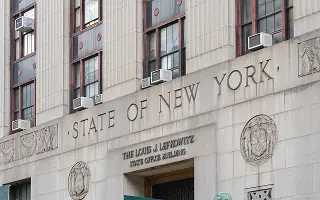
A Uniform Commercial Code (UCC) search in New York checks public records to determine whether a business or individual has pledged assets (such as equipment, inventory, or accounts receivable) as collateral for loans, thereby revealing existing liens. When searching for New York state UCC liens, the process is complex, requiring you to search the state-level DOS database, 62 county clerks' offices, New York City (NYC) borough clerks, and county/federal systems to find everything you need. Instead of wasting time visiting dozens of offices, you can use EntityCheck. This robust database consolidates all that data in one easy-to-use platform, making a New York state UCC search faster and easier.
What Is a UCC-1 Financing Statement?
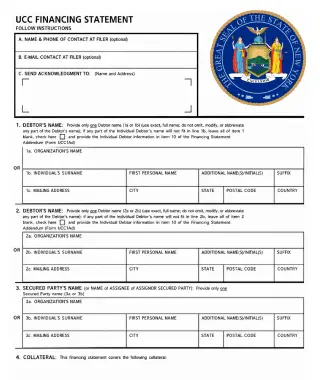
A UCC-1 financing statement is a legal form filed by creditors to publicly notify that they have established a legal claim/security interest (a lien) in a debtor's specific personal property or business assets used as collateral. It establishes a creditor's priority over other creditors in the event of default or bankruptcy.
What is a UCC-1 Financing Statement? A UCC-1 financing statement is a public notice instrument of a lien placed against the debtor's collateral (inventory, equipment, accounts receivable, and business fixtures).
Why Does it Give Legal Notice Against Third Parties? A UCC filing (with the state) gives legal notice against third parties by creating a public, searchable record that establishes a secured creditor's legal interest in a debtor's collateral, ensuring "priority" (first-to-file status) if the debtor defaults.
What "Perfecting a Lien" Means and Why it Matters for Creditors: Perfecting a lien through UCC filings means formally recording a security interest in a debtor's collateral (like equipment or inventory) by filing a UCC-1 statement with the state government. This creates public notice, establishes a lender's priority over other creditors, and secures the lender's right to seize assets upon default.
Where Most New York UCC Filings Go: Most New York UCC filings go to the New York Department of State central database. However, many also go to county or borough clerks or county-level federal lien databases.
The Exceptions: Fixture filings and real property-related collateral are filed with the county clerk.
What a NY UCC Search Reveals

A state of New York UCC search will reveal eight main data points as described below:
Debtor Name & Address - Name and address of the individual or business entity borrowing money and pledging collateral (named on the lien).
Secured Party Name - Name and address of the lender(s) holding the lien (secured party) and the party who filed the lien.
Collateral Description - Details of the specific property (encumbered assets) pledged as security, such as "all assets," equipment, or inventory; broad language may be used to include "all assets" or specific items singled out.
Filing Date - The date the lien was filed; it establishes priority among multiple creditors, which can be crucial during bankruptcy.
Lapse Date - The date when the lien lapses, after which an unfiled continuation means the lien is dead; typically, that is 5 years from the date of filing.
Filing Number - A unique ID assigned to the lien/UCC filing for retrieving certified copies or tracking amendments.
Amendments / Terminations - Crucial updates, including continuations (extending the lien), assignments (transferring the lien), or terminations (releasing the lien); important for tracking whether the filing has been modified, extended, or released.
Assignees - Name and address of other parties if the original secured party has transferred its interest to another entity.
Fixture filings can also appear, which are liens on personal property attached to real estate (e.g., solar panels, manufacturing equipment).
Why Do UCC Filings Matter in New York?

UCC filings in New York matter because they serve as critical public notice, allowing lenders to perfect security interests in business assets, machinery, or inventory and secure their priority over other creditors. By filing with the New York Department of State, creditors secure their legal rights in the event of a debtor's default, while also allowing businesses to disclose their financial obligations to potential lenders. Under New York's UCC Article 9, the first creditor to file a UCC-1 financing statement holds the "first position," giving them priority rights to collateral, such as equipment or inventory.
New York UCC filings support public records and transparency. Filings ensure that lenders, vendors, and partners can check the New York UCC search system to see if a business has outstanding debt, which indicates creditworthiness. New York City lenders file UCC-1s against borrowers nationwide, making New York a crucial search jurisdiction even for out-of-state debtors. Without a filed UCC-1, a creditor might be considered unsecured, risking the loss of assets in a bankruptcy or an insolvency scenario.
New York is one of the highest-volume UCC filing states in the U.S. The New York filing landscape is extremely complex. Instead of a single location, filings must be reported to the New York Department of State (DOS), with up to 62 county clerk's offices, and five New York City borough clerks, alongside state and federal offices as well.
New York UCC filings also affect financing. Active UCC filings (liens) on a company's record can make it harder for the business to secure new loans, as new lenders see the existing secured debt. Real estate and co-op transactions (buying/selling) in New York frequently require UCC searches due to fixture filings and co-op share financing. These UCC records can affect deals. In mergers and acquisitions, proper due diligence requires a UCC filing and a New York search on target companies to identify secured creditors.
How to Run a New York UCC Search
Use the detailed steps below to run a UCC search in New York to identify liens, lenders, and encumbered assets.
Step 1: Identify the Correct Debtor Name
New York UCC searches are name-exact, meaning that the database returns results based on the debtor name string you enter, with no fuzzy matching. Even a single variation (such as a middle initial, comma placement, or DBA abbreviation) can throw off the search and return zero results. Even if there is an active filing, you might miss it without the exact name. When searching for individuals, you must use their legal name in the Last, First, Middle format.
Step 2: Choose Your Search Method
Choose your search method from the three main options. You can perform a New York Secretary of State Business search for UCC filings through the DOS e-filing portal. The search is free but provides only non-certified results suitable only for a preliminary review. You can send in a New York DOS UCC search request form and pay the fee. The results will be slower, but you can order certified results through this method. The fastest and most efficient method is to use an authorized search service, which provides instant, viewable results, allows you to order certified records, and handles state and county searches simultaneously.
Step 3: Review the Search Results
Examine the New York State UCC search results carefully. Review each filing for the debtor's name and match it to confirm it is the correct debtor (not a coincidental name match). Match the collateral description of the assets to the assets that are encumbered and watch for "all assets" language. Identify the secured party and filing/lapse dates to confirm that the lien is current and not dead. Check all amendments and continuations that modify the original filing and may expand collateral or extend lapse dates. Note any termination statement that releases liens and flag any assignments (meaning that the original filer may not be the current lien holder).
Step 4: Obtain Certified Copies If Required
When performing internal due diligence or a preliminary lender review, non-certified results through the online portal are sufficient. Searching online yields virtually instant, same-day results with no waiting. However, there are situations such as court filings, real estate closings, and certain regulatory submissions that require certified copies of UCC filings. When ordering certified copies online or by mail, it can take 1-3 business days through the New York DOS or an authorized service. Certified copies cost a small fee.
NY UCC Search for Out-of-State Businesses
For out-of-state businesses, New York UCC searches follow the "Jurisdiction Rule" (UCC Article 9), which requires companies to file in the state where the debtor is incorporated or organized, rather than in the state where the assets are located. For a company to be officially "located" in New York (requiring a search there), it must be incorporated in New York or have its sole place of business there.
Even with strict personal jurisdiction requirements, New York remains a premier jurisdiction for locating and seizing assets for out-of-state debtors. New York courts can recognize foreign judgments without personal jurisdiction and use long-arm statutes to seize New York-based assets (such as bank accounts) or assets held by out-of-state entities doing business in New York. New York also provides a streamlined procedure for recognizing a judgment from another state, allowing the collection of assets located in New York.
To adequately cover all your legal bases, perform a thorough UCC search in New York through the New York Department of State Public Inquiry System, county clerks' offices, or borough clerks' offices to uncover all a business's liens and encumbered assets.
UCC Forms and Filing Duration in New York

UCC-1: This is the initial form filed to provide public notice that a creditor has a security interest in the debtor's personal property; it officially secures the creditor's lien rights and establishes priority.
UCC-1Ad: This serves as an addendum to the UCC-1 form, providing additional space for debtor names, secured party names, or specific collateral descriptions.
UCC-3: A UCC-3 is another amendment form filed to change an existing UCC-1 financing statement; it can serve as a continuation (to renew the lien for 5 more years), a termination (to cancel the lien), an assignment (to transfer rights), or for modifications such as a name/address change.
UCC-3Ad: This is an amendment addendum for the UCC-3 used to provide additional information, such as additional party names or updated collateral information.
UCC-11: This is the official search request form for ordering certified UCC search results regarding a public record for existing UCC filings against a specific debtor from the New York DOS.
How Long Are New York UCC Filings Effective?
Depending on the situation, New York UCC filings are effective as outlined below.
Standard Lapse: A standard UCC lien expires five years from the filing date. It is a lien that is extinguished when no continuation has been filed before the lapse date.
Continuation: To prevent a lapse, a UCC-3 continuation must be filed within the 6-month window before the lapse date, effectively extending the filing for another five years. Outside this window, a continuation is ineffective.
Deceased Debtor: In cases where a debtor has died, the filings against the deceased person's estate lapse two years after the debtor's death. This applies to estate administrations and probate transactions.
Manufactured Homes: Manufactured home liens are the only category that extends beyond the standard five years. These UCC filings have a 30-year lapse period.
"All Assets" Liens: "All Assets" liens are extremely common in New York, especially in commercial lending. A single UCC-1 describing "all assets" or "all personal property" effectively encumbers everything, including (but not limited to) equipment, receivables, inventory, and deposit accounts.
What Happens When a NY UCC Filing Lapses

When a New York UCC-1 financing statement lapses (five years after filing), the secured party loses its perfected status and priority, rendering the security interest unperfected under the law. The creditor becomes an unsecured creditor, and if the debtor files for bankruptcy, the creditor risks losing all collateral rights. Because lapsed filings cannot be revived, the original secured party must file a brand new UCC-1 financing statement, which then resets their priority clock to the new filing date. This has a direct impact on lien searches: a lapsed filing remains in the database for 1 year before being purged, so it is still searchable during that period. A searcher who finds a filing with a lapse date must also check whether a continuation was filed before that date or a new statement was filed replacing it. When reviewing New York Secretary of State UCC search results, never assume that a post-lapse-date filing is irrelevant. Always check for a continuation or replacement filing to be sure.
UCC Lien Priority Explained
The foundational rule of UCC lien priority is "first to file or perfect". When multiple creditors claim a security interest in the same collateral (e.g., equipment, inventory), the creditor who files a UCC-1 financing statement first, or perfects their interest first, takes precedence. Even if a creditor provides a loan later, if they file their financing statement before other creditors, they often retain first-priority status. A perfected security interest generally prevails over unperfected security interests, unperfected judgment creditors, and bankruptcy trustees.
Although the first-to-file rule is the default, several exceptions can significantly alter a creditor's position. The most common exception is the Purchase Money Security Interest (PMSI), which gives a creditor who finances the purchase of specific new collateral (such as machinery) a first-priority position on that new asset, even if another lender has an earlier, broader "blanket lien". Other complexities include future advances (where earlier filings can lock in priority for future, uncommitted loans), fixture filings (liens on equipment attached to real estate which may be subordinate to real estate lenders if not filed with local land records), and control over perfection which means for certain assets like deposit accounts or investment property, taking "control" of the asset takes priority over simply filing a UCC-1.
Conducting a comprehensive UCC search before lending is critical because the first-to-file rule means a new lender may be unable to secure a superior lien position and may get "stuck" behind existing lenders. A search reveals the existing encumbrances (blanket liens) that could hinder a new creditor's ability to recover their investment. Moreover, because the debtor's exact legal name is required, and even slight inaccuracies can cause a filing to be invalid, a thorough search of public records, including pending litigation, tax liens, and judgment liens, allows a lender to accurately evaluate the collateral and true financial stability of the borrower before closing.
Who Needs a NY UCC Search
The detailed personas below benefit from a UCC search in New York.
Lenders and Financial Institutions

Commercial banks, asset-based lenders, factoring companies, and equipment lenders can benefit from a thorough UCC filing search to mitigate risk. When extending credit or advancing additional funds against collateral that is already encumbered by a prior UCC-1 statement, it can subordinate your position as a lender. If the borrower defaults, you may not be paid first and could lose your entire investment. Before lending to individuals or businesses, use a professional, authorized UCC reporting service for quick, certified results of any UCC filings to stay on schedule and manage risk.
Attorneys and Legal Professionals

Mergers and acquisitions attorneys, bankruptcy attorneys, real estate lawyers, and litigation attorneys also need fast, accurate UCC filing information for commercial closings (with fixture issues) to identify any encumbrances on judgment debtors. Failing to discover a secured creditor during a pre-closing search will result in a post-closing liability. If the debtor files for bankruptcy, it will affect the creditors' priority schedule and may result in a loss of funds. New York is a complex state that requires a search across multiple databases, making it crucial to use the proper search tool (EntityCheck) that supports simultaneous state and county searches and provides certified copies for court filings.
Businesses and Buyers

Whether you are a business professional purchasing company assets, a franchise buyer, a business owner checking their own status, or a supplier extending trade credit, a New York UCC search can help lower your risk of loss. If you purchase a company with equipment or inventory from an existing business and don't check first, you could end up with encumbered assets and inherit a lender's collateral claim. To perform the most complete full-picture due diligence, you need to search effectively, which means using a service that bundles state, county, and federal tax liens, the way EntityCheck does.
Real Estate Professionals

Commercial real estate closing attorneys, co-op transaction participants, and lenders on mixed-use properties also need to scour UCC filings to manage risk and avoid losses. Title searches do not reveal fixture filings or co-op share financing, two crucial issues that can arise in New York and derail a property transfer. The key is to use a UCC filing search service with New York-specific expertise and borough-clerk coverage for NYC co-op transactions.
Individual Debtors and Business Owners

Once a lien has been paid off and released, you need to verify that the proper paperwork was filed to validate it. A UCC lien search can do that. Business owners often need to check their own filing history before taking out loans. Borrowers may need to confirm when a lender has filed a continuation of the lien, as an undetermined lien from a paid-off loan can block new financing or complicate a sale. The most effective way to ensure the lien is clear is to use EntityCheck for a fast turnaround and an easy order process for certified UCC filing documents.
New York-Specific UCC Considerations

New York has some specific differences regarding UCC liens, as detailed below:
NYC Co-Op Financing and UCC Filings
New York City is unique in offering a special type of housing called co-ops. Co-op apartments are not real property. Instead, co-op tenants own shares and a proprietary lease (personal property) rather than real property, and lenders must use a unique process to secure their interest. Co-op buyers take out a "share loan" (secured by the stock certificate and the proprietary lease) to purchase shares in a cooperative corporation rather than real estate.
At closing, the lender files a UCC-1 financing statement to establish their priority lien and to perfect the bank's security interest. This filing serves as public notice of the lender's lien on the borrower's shares and proprietary lease, allowing for a quick non-judicial foreclosure if the borrower defaults. Instead of attaching to a deed, the lender uses the borrower's personal property of the lease and the lessee's owned shares as collateral. A UCC-1 prevents the borrower from selling the co-op or incurring additional debt without approval.
These UCC-1 filings are recorded with the local borough clerk (at the county level), not the New York Department of State database. The initial filing is valid for five years following the date of closing. If the loan lasts longer than 5 years, the lender must file a continuation to keep the lien active. Once the loan is paid off, the lender files a termination to release the lien. If the borrower defaults, the UCC allows the lender to initiate a non-judicial, expedited foreclosure process and sell the shares at a public auction.
If a searcher checks only the New York Department of State's database, they will miss the co-op lien entirely. To perform a thorough UCC lien search, you must check the New York DOS state database along with the relevant borough clerk search to find all the pertinent public records. EntityCheck makes this easier by combining all four databases into a single location with a single search.
Agricultural Liens in New York
Agricultural liens in New York are legal claims held by creditors, such as suppliers, lenders, or landlords, against a farmer's products, livestock, or equipment to secure payment for goods or services provided. These liens are statutory rather than voluntary, meaning they arise by the operation of law rather than by voluntary agreement, ensuring that those who provide essential inputs (seed, fertilizer, feed) or services (breeding, boarding) are repaid.
New York law provides several types of statutory liens specific to the agricultural sector; they are as follows:
Stallion or Bull Service Lien: Under NY Lien Law § 160, owners of a stallion or bull have a lien on the mare or cow (and their offspring) served, to secure the payment of the service fee.
Stableman's Lien: Providers of boarding, feeding, or caring for animals have a lien on those animals for the agreed-upon fees. This is generally a possessory lien, meaning the provider must often retain the animal to enforce the lien.
Milk Producer's Security Trust: The NY Commissioner of Agriculture and Markets administers a trust (Section 25-b) against licensed milk dealers to ensure prompt payment to producers.
Agricultural Producer's Security: Similar to the milk trust, this covers producers selling to wholesale dealers (over $10,000 annually) and requires bonds to protect them from default.
Stray Animal Lien: Under New York Town Law § 313, a landowner can place a lien on animals that wander onto their property, provided the animals caused damage, and the owner was negligent in fencing.
Beyond specific state statutes, UCC Article 9 applies to nonpossessory liens on farm products. These are crucial for lenders providing loans for farming operations. To qualify, the lien must be created by statute, for services/goods furnished in the ordinary course of business, and not depend on possession. To be valid against other creditors, a financing statement must be filed with the New York Department of State.
Traditional statutory liens (like the stableman's lien) are often possessory; you must keep the animal to enforce it. UCC agricultural liens are nonpossessory; the farmer keeps the products, but the lender files a claim. Many statutory liens do not require public filing to be valid, making them "hidden liens," while UCC liens require a filed financing statement.
A perfected UCC agricultural lien generally takes priority over later security interests, but a statutory lien's priority depends on the specific law that created it. If the debtor defaults, the lienholder can initiate a foreclosure process. For strays, notice must be given within 30 days of the animal entering the land. Agricultural liens often have strict timelines for filing and enforcement (e.g., within 365 days of sale for some farm products).
Agricultural liens have specific filing requirements that differ from those for standard UCC filings. New York maintains a Central Filing System (CFS) specifically for agricultural liens under Article 9. Therefore, farm product buyers must search the CFS separately; it is not part of the New York Department of State UCC database, and these liens will not appear in a standard UCC search. Anyone engaged in upstate NY agricultural transactions, food distributors purchasing farm products, agricultural lenders, and those extending credit secured by crops, livestock, or farm equipment must keep this in mind before making any purchase. An EntityCheck search will cull data from all relevant databases to provide you with all the information needed.
Federal Tax Liens - A Separate Search Required
Federal tax liens and UCC liens are distinctly different. A federal tax lien is when the government makes a legal claim against a taxpayer's property due to unpaid federal tax debt. A Uniform Commercial Code filing is a voluntary, contractual agreement between a lender and a borrower to secure a loan. Federal tax liens are non-consensual statutory claims that automatically attach to all of a taxpayer's real and personal property, including future assets, until the debt is paid off. With federal tax liens, the lien exists before any public record is filed, often referred to as a "silent" lien, and attaches to all current and future property.
To establish priority over other creditors, the IRS files a Notice of Federal Tax Lien (NFTL) in public records (usually at the Secretary of State level or local county level). The lien remains in effect until the tax debt is paid, the debt becomes legally unenforceable, or the IRS withdraws the lien. The general rule is that a perfected UCC filing made before the IRS files the Notice of Federal Tax Lien (NFTL) takes priority over the IRS. If the IRS files the NFTL first, the IRS takes priority.
The IRS files federal tax liens, and they are not part of the New York UCC database. They are a completely separate type of lien filed with the county clerk in the county where the debtor's residence lies or their principal place of business.
When searching for UCC liens, you will not find federal tax liens. Before engaging in any transaction with meaningful financial exposure in New York, perform a thorough lien search, including the New York Department of State's UCC database, county clerks' offices (for fixture filings), and a county clerk's federal tax lien search.
UCC Article 9 requires the exact, legal name of the debtor for a filing to be valid. The IRS has more "wiggle room" for name variations, meaning an FTL might not be found if only the exact legal name is searched. EntityCheck can make these searches more efficient and expedient.
Judgment Lien vs UCC Lien
A judgment lien is a court-ordered, involuntary claim against a debtor's property (real estate or personal property) following a lawsuit, often called an "abstract of judgment". Unlike a UCC lien, which is voluntary and secures specific assets, a judgment lien arises only after a creditor wins a lawsuit to enforce payment. A UCC lien is voluntary and often attaches to inventory, equipment, and other physical assets.
To search for New York judgment liens, check the local county clerk's office, where the property is located, or where the debtor resides. These offices maintain real estate and local lien records. Some have online search tools. You can also use the NYC ACRIS system for New York City and the NYS UCC/Federal Tax Lien site for UCC liens.
Before lending money or engaging in purchase transactions, verify all liens in place to conduct proper due diligence and prevent any loss.
New York UCC Search - Common Mistakes to Avoid
Some common mistakes to avoid when searching for UCC records are as follows:
Searching only the New York DOS state database and missing county-level fixture filings - Not searching all public records/locations for UCC liens could mean that active liens exist that you do not know about, resulting in financial loss or risk of secured priority.
Using an incorrect or abbreviated debtor name variation - If you search using even one wrong character (including spaces or commas), you could see zero results even when filings exist; New York forces an exact-name search.
Assuming a filing past its lapse date is automatically extinguished - Don't assume that a filing with a past lapse date is actually dead; a continuation may have been filed, resetting the lapse clock.
Failing to search all debtor name variations - Be prepared to run several searches to cover all name variations because individuals may have maiden names, former names, DBA names, or trust names; each requires a separate search string.
Not ordering certified copies when the transaction requires them. When offered, always order certified copies, as the courts and real estate professionals do not accept non-certified online results, which could result in substantial closing delays.
Treating a UCC search as a substitute for a federal tax lien search - When performing deep due diligence, understand that these are two separate databases (they do not share information), and you will need to search both to find different types of liens.
Why Use EntityCheck for Your NY UCC Search

New York is one of the most complex states for performing the four-part UCC search because it requires you to search through the New York Department of State, visit relevant county clerks for fixture flings, search New York City borough clerks if a co-op or NYC fixture filing is involved, plus you must check county-level federal tax liens, county court judgement liens, and optionally the New York Central Filing System for agricultural liens.
Thorough due diligence requires six separate searches across four different types of databases, which can be time-consuming, confusing, and yield inaccurate results. EntityCheck offers a better, faster solution. EntityCheck's search tool combines data from all four database types and allows unlimited searches. Plus, you can order certified copies directly through the platform. You get the right information at your fingertips when you need it, without the hassle of going through the New York Department of State and related government agencies.
FAQ
How long does a New York UCC search take?
A UCC search with the New York Department of State typically takes 24 to 48 hours for processing, though online searches can sometimes provide faster results. The state, along with private search firms, manages these requests through the Albany office, with expedited services available. County searches can take 3-5 days. Using EntityCheck, you can see results instantly online.
How do I search UCC filings in New York?
Search UCC filings in New York through the New York Department of State's Public Inquiry System, available online, or you can use a professional service like EntityCheck, which combines multiple databases into one. The New York DOS system allows free, public searches. You can search by debtors, secured parties, or file numbers, and it is available daily from 6:00 a.m. to 11:30 p.m. To get certified copies, submit a Form UCC11 with a $25 fee.
How far back do New York UCC records go?
New York UCC records generally show active financing statements valid for five years from the date of filing, with lapsed records retained in the searchable database for at least one year, and often up to five years and one month after the lapse date. While the standard effective life of a filing is five years, some filings can last longer (e.g., 30 years for specific utility or housing transactions).
What is the difference between a state and county UCC search in New York?
In New York, a state-level UCC search (conducted through the Department of State) covers security interests in general personal property (such as inventory and equipment). A county-level search focuses on collateral tied specifically to real property, such as fixtures (e.g., HVAC systems, machinery, lighting) or timber/minerals located within a specific county's land records.
How do I remove or terminate a UCC lien in New York?
To remove a UCC lien in New York after paying off a debt, you must file a UCC-3 Financing Statement Amendment (termination form) with the New York Secretary of State. The secured party (lender) is responsible for filing this within 20 days of a written demand, often after the debt is paid off. If they fail to comply, you can file it yourself.
Are New York UCC filings public records?
Yes, New York UCC filings are public records, maintained by the Department of State. They serve as public notices, allowing anyone to search for filed UCC-1 financing statements, amendments, and federal tax liens to identify secured interests in a debtor's business property. However, you must search multiple locations to find all liens in New York.
Do I need a UCC search for a New York co-op apartment purchase?
Yes, a UCC search (specifically a co-op lien search) is required when buying a New York co-op, even if you are paying cash. Because co-ops are personal property (shares) rather than real property, UCC searches are necessary to ensure the seller has a clear title and that there are no outstanding liens, such as tax liens, judgments, or bank loans.
What is a UCC-1 vs. a UCC-3 in New York?
A UCC-1 (Financing Statement) is the initial filing used in New York to publicly record a lender's legal interest in a debtor's assets, acting as a "lien". A UCC-3 (Amendment) is the form used to amend, renew (continue), or terminate that original UCC-1 filing throughout its lifespan. The UCC-1 establishes priority; the UCC-3 manages the filing's status.
Can I search UCC filings by a secured party in New York?
Yes, you can search UCC filings by a secured party in New York through the Department of State. The state allows "Secured Party Searches" to identify financing statements associated with a specific lender or creditor, with search options available through their online system or by submitting a National Information Request (Form UCC11).
What counties in New York require a separate UCC search?
In New York, a separate UCC search is required at the county level for fixture filings (items attached to real estate) and specific agricultural liens, in addition to the state-level filing. While most UCCs are filed with the New York Department of State, local county clerks, such as the Erie County Clerk, handle real property filings. You should check the county where the assets or the debtor are located.
How much does a NY UCC search cost?
A New York State UCC search using Form UCC-11 costs $25 per debtor name. This fee covers the search itself. If you want copies, you may have to pay additional fees, for example, $5 for a plain copy and $10 for a certified copy.
Is a UCC search the same as a title search in New York?
No, a UCC search is not the same as a title search in New York. A title search focuses on ownership and liens on real property (land and buildings). In contrast, a UCC search uncovers security interests in personal property or business assets (such as equipment, fixtures, or inventory). Both are distinct, complementary searches used in due diligence to get the complete picture and minimize risk.