Search New Jersey UCC Filings & Liens

A UCC search in New Jersey identifies existing liens or security interests filed by creditors against a debtor's personal property or business assets; it helps lenders, buyers, and businesses assess risk before financing or acquisitions. Unlike most states, where UCC filings are recorded with the Secretary of State, New Jersey has a separate division, the New Jersey Division of Revenue and Enterprise Services (DORES), where these liens are recorded. However, some UCC filings are also recorded at the county level in New Jersey, making searches even more complex. Thankfully, EntityCheck solves the problem with a robust database that consolidates all UCC data in a single, easy-to-use platform and searches for variations with a single search string.
What Is a UCC-1 Financing Statement?
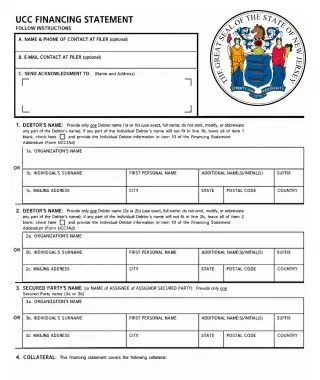
A UCC-1 financing statement in New Jersey is a public notice filed by a secured creditor to establish a legal claim over a debtor's specific assets/collateral.
What is a UCC-1 Financing Statement? A New Jersey financing statement is a legal form filed by a creditor to formally record a security interest in a debtor's personal property or business assets. It serves as public notice that the creditor has a claim on the collateral, protecting their priority interest if the debtor defaults or files for bankruptcy.
Why Does it Give Legal Notice Against Third Parties? A New Jersey UCC-1 financing statement serves as a legal notice to third parties (such as potential lenders or buyers) by creating a public, searchable record of a secured creditor's priority interest in a debtor's collateral. Under N.J.S.A. § 12A:9-503(a)(1), this filing perfects the security interest, establishing the creditor's priority over others and alerting parties to check the New Jersey Division of Revenue and Enterprise Services' records for existing claims.
What "Perfecting a Lien" Means and Why it Matters for Creditors: Filing a UCC-1 acts as the primary method to "perfect" a security interest under Article 9 of the Uniform Commercial Code, ensuring the secured creditor has a senior claim over subsequent creditors or buyers. It matters because it establishes legal priority in bankruptcy, secures the right to seize collateral if the borrower defaults, and places other creditors on notice.
Where Most New Jersey UCC Filings Go: Most New Jersey Uniform Commercial Code filings are submitted to the New Jersey Division of Revenue and Enterprise Services, most often electronically through the New Jersey Portal. DORES acts as the central filing office for most secured transactions to notify creditors of debtor assets
The Exceptions: In New Jersey, UCC filings that are not recorded with the Division of Revenue and Enterprise Services relate to real estate, such as fixture filings, timber to be cut, or as-extracted collateral. These specific filings are generally recorded with the local county recording office (typically, the register of deeds or county clerk), where the mortgage on the related real estate would be filed, rather than centrally with the state.
What a NJ UCC Search Reveals

A New Jersey UCC search reveals existing liens or security interests filed against a debtor's personal property or business assets, including the secured party's name, the debtor's details, the collateral description, and the filing history. It identifies who has a legal claim to assets, helping lenders and buyers determine priority, assess risk, and ensure a clear title before transactions. More details on the data are below:
Debtor Name & Address - The name and address of the individual or organization with the lien against them.
Secured Party Name - The name and address of the lender or creditor holding the lien.
Collateral Description - Specific, detailed descriptions of personal property or "all assets" used to secure the debt. Watch for "all assets" language, which means that current and sometimes future assets are included.
Filing Date - The initial filing date and state/office where it was filed. This establishes priority order when multiple creditors exist.
Lapse Date - The date upon which the filing expires. This is typically 5 years from the filing date, after which an unfiled continuation renders the lien dead.
Filing Number - A unique ID assigned by the state for retrieving certified copies or tracking amendments.
Amendments / Terminations - Any amendments, continuations, assignments, or terminations associated with the original filing.
Assignees - Shows whether the original secured party has transferred its interest to another entity.
Why Do UCC Filings Matter in New Jersey?

Due to its dense population, large number of business entities, and proximity to major economic hubs such as New York City and Philadelphia, New Jersey handles a significant volume of UCC commercial financing statements.
UCC filings in New Jersey are crucial legal tools that protect lenders by publicly establishing priority claims on a debtor's assets, ensuring they are first in line for repayment if a borrower defaults or enters bankruptcy. That makes New Jersey an important search destination for out-of-state debtors.
Because New Jersey has seen fraudulent UCC filings, the state, similar to others with high volume (California, Texas, New York), has tight regulations on identifying debtor and secured party information to ensure security.
Many real estate, co-op, and M&A transactions require a thorough UCC search in the State of New Jersey, including searches of target companies/individuals to identify secured creditors. These filings are often found in business credit reports, helping creditors assess risk before extending new credit or investing.
How to Run a NJ UCC Search

To run a New Jersey state UCC search, follow the detailed steps below.
Step 1: Identify the Correct Debtor Name
UCC searches in New Jersey are name-exact, meaning that the database will return zero results if you don't enter the correct name. There is no fuzzy matching, and even a small variation, such as a missing middle initial, DBA abbreviation, or a misplaced comma, can skew your results. When searching for individuals, use the correct format of Last, First, Middle. Before searching, you must identify the correct, exact debtor name.
Step 2: Choose Your Search Method
Searching offers you three different methods, each with its own benefits. If you are performing a quick, preliminary review of UCC records, an online search will suffice. You can visit the New Jersey Division of Revenue and Enterprise Services UCC Online Services portal to search for non-certified results. You can also mail in a request to the New Jersey Division of Revenue & Enterprise Services - UCC Section, PO Box 303, Trenton, NJ 08646. For the quickest turnaround and to see both state and county filings side-by-side, use an authorized search service like EntityCheck. You can search by individual, organization, or filing number. You can also choose an "Output Type" from Status Report, Copies Only, and Status Report with Copies.
Step 3: Review the Search Results
Step three is crucial, and when reviewing the results, you need to verify all information carefully. First, check the debtor's name and confirm that it matches the correct debtor (not a coincidental match). Assess the collateral description to see if it matches the encumbered assets. Watch carefully for "all assets" language, which indicates everything is included. Examine the secured party's identity and verify, along with the filing and lapse dates, whether the lien is still current. Check all UCC-3 amendments, continuations, and look for any terminations. These documents expand collateral or extend lapse dates, and terminations release liens. Watch for any assignments where the original lien holder transfers it to another party.
Step 4: Obtain Certified Copies If Required
Performing basic due diligence doesn't require anything beyond a free online search. However, there are many situations where you need certified copies of UCC filings in New Jersey. Certified copies of UCC filings verify the legal status of liens on business assets during due diligence, when securing commercial lending, and managing creditor priority. Purchasing a company or business assets also requires certified copies before closing. Before closing a loan, lenders use certified searches to identify competing claims to assets, ensuring they hold the senior, secured position. In the event of a dispute over collateral ownership, such as in bankruptcy or default, certified copies are needed for official proof.
Additionally, after a loan is paid off, businesses may need a certified copy to prove a UCC-3 termination statement was filed and that the lien is no longer active in New Jersey public records. Using a comprehensive UCC search tool, you can instantly search both state and county records to find UCC filings. When ordering certified copies, you will be charged a fee.
NJ UCC Search for Out-of-State Businesses
Under Revised Article 9 of the Uniform Commercial Code, the governing jurisdiction for filing a UCC-1 financing statement is generally the state where the debtor is located. For registered organizations, such as corporations or LLCs, this means the state of incorporation, not where they physically do business. Therefore, if an out-of-state business is incorporated in Delaware but operates in New Jersey, the primary, "perfected" UCC filing should be made in Delaware. However, if the debtor is an individual, they are located in the state of their principal residence.
Despite the "state of incorporation" rule, a New Jersey UCC search is critical because it reveals "fixture filings", liens against equipment or property physically located in New Jersey. Furthermore, if an out-of-state business brings collateral into New Jersey, a creditor may have a temporarily perfected interest, making a New Jersey search necessary to identify potential priority disputes. Additionally, if the debtor has registered to do business in New Jersey, local searches are crucial to identify any local tax liens or specific in-state financing agreements.
To conduct a UCC search for out-of-state businesses, use the New Jersey Department of the Treasury's Division of Revenue and Enterprise Services system. You can perform a free "non-certified" search to check for active filings using the exact legal name of the entity, utilizing wildcard characters (e.g., "%") for partial name searches. For legal due diligence, you will need a "certified" search to obtain an official record of all liens. When searching, search under both the organization name and the exact name as it appears on the Certificate of Authority in New Jersey.
UCC Forms and Filing Duration in New Jersey

In New Jersey, Uniform Commercial Code filings are used to provide public notice of a secured party's interest in a debtor's collateral. The state has mandated electronic filing for almost all UCC documents through the Division of Revenue and Enterprise Services since July 1, 2015. The forms used in New Jersey are as follows:
UCC-1 (Financing Statement): The initial filing used to perfect a security interest in collateral.
UCC-1Ad (Addendum): An addendum to the UCC-1 form providing additional space to add extra collateral or additional secured parties.
UCC-3 (Amendment/Continuation/Termination): Used to change, renew, or end an existing UCC-1 filing.
UCC-11 (Information Request): Used to search for existing liens against a debtor.
How Long Are New Jersey UCC Filings Effective?
In New Jersey, a standard Uniform Commercial Code financing statement is effective for five years from the date of filing. After this period, the filing automatically lapses, and the secured party loses its priority unless it files a continuation statement. However, lapses vary based on the situation.
Standard Lapse: A UCC-1 financing statement is valid for exactly 5 years from the original filing date. After that, the secured party must file a continuation statement (UCC-3) to extend the security interest. If a lender does not renew it, they lose their perfected status over the collateral, potentially becoming an unsecured creditor, leaving them vulnerable.
Continuation: The continuation statement (UCC-3) must be filed within the six-month window prior to the 5-year expiration date. A timely filed continuation statement extends the original 5-year filing for another 5 years, starting from the date the filing would have otherwise lapsed. Filing too early (outside the 6-month window) or too late (after the 5-year lapse) will result in rejection of the filing or lapse of the security interest.
Deceased Debtor: In New Jersey, a UCC-1 filing remains effective for its standard five-year period even if the debtor dies, provided it does not expire or lapse. The debtor's death does not automatically terminate a perfected security interest; however, creditors must typically file a claim against the estate within nine months of the death to collect.
Manufactured Homes: Initial filings for manufactured-home transactions or public finance transactions are effective for 30 years.
"All Assets" Lien: In New Jersey, a UCC-1 financing statement, including those with an "all assets" or "all personal property" description, is effective for five years from the date of filing. To maintain the security interest, a continuation statement must be filed within 6 months of the 5-year expiration date. The "all assets" designation refers to the collateral but does not affect the lapse date.
Additionally, filings against a "transmitting utility" do not expire until a termination statement is filed.
What Happens When a NJ UCC Filing Lapses

When a New Jersey UCC-1 financing statement lapses because a continuation was not filed within the valid six-month window, the secured party's interest becomes unperfected according to New Jersey law. The original party does not retain its prior priority position. The creditor loses their place in line. If the debtor goes bankrupt, the creditor is downgraded to an unsecured creditor and may lose rights to the collateral. Upon lapse, the security interest is deemed never to have been perfected against a purchaser of the collateral for value. For due diligence, a searcher finding a filing with a past lapse date must actively verify that no continuation statement was filed prior to that date. During a UCC search in New Jersey, never assume a past-lapse-date filing is completely irrelevant without verifying that there is no continuation.
UCC Lien Priority Explained
Under Article 9 of the Uniform Commercial Code, lien priority in New Jersey among secured creditors is generally determined by a "first-to-file-or-perfect" rule. The first creditor to properly file a UCC-1 financing statement with the appropriate state authority (usually the Secretary of State, but in New Jersey, it's the New Jersey Division of Revenue and Enterprise Services (DORES)) generally establishes a "first lien position" on the collateral. If multiple creditors claim the same assets, the one who files or perfects first gets paid first when the debtor defaults or files for bankruptcy.
Several exceptions can disrupt this basic timeline, including Purchase Money Security Interests (PMSI), in which a lender financing specific equipment or inventory can jump to the front of the line if properly filed within 20 days. Additionally, federal tax liens, certain landlord liens arising under the New Jersey Loft Act, and construction liens may also override prior-filed UCC filings. Special care is required for motor vehicles that require title notation and for "mental gaps" where UCC filings are not immediately indexed by the state, creating a risk of unknown intervening liens.
Because of the "first in time" rule, a comprehensive UCC filing search in New Jersey is critical due diligence to identify existing encumbrances on a debtor's assets before closing a deal. A search reveals not only current lien holders but also their priority, allowing a lender to decide whether to request subordination agreements or decline the loan if the collateral is already overburdened. Due to the risk of "hidden" liens and the need for perfect accuracy in the debtor's legal name, lenders must conduct thorough searches to ensure their security interest will be superior, preventing a complete loss of security in default situations.
Who Needs a NJ UCC Search
A UCC search in New Jersey is essential for lenders, attorneys, and buyers involved in commercial transactions to identify existing liens on a business's assets. It ensures priority over collateral (like inventory or equipment) and confirms that a company is free of debt encumbrances. Searches are performed through the New Jersey Division of Revenue and Enterprise Services or through commercial services such as EntityCheck.
Lenders and Financial Institutions

Commercial banks, other financial institutions, asset-based lenders, factoring companies, and equipment lenders all use UCC searches to assess a borrower's collateral availability and determine whether prior creditors have claims to assets before approving loans. Before extending credit or advancing funds against collateral, they need to ensure it is not already encumbered by prior UCC-1 financing statements to ensure the lender's position (meaning they will not be paid first if the borrower defaults). EntityCheck offers a quick way to search UCC filings and view state and county records in one place, helping banks and lenders close on time.
Attorneys and Legal Professionals

Attorneys and other legal professionals use New Jersey UCC filing searches to verify the legal status of collateral and ensure proper filing to protect their clients' interests. This comes into play during mergers and acquisitions, bankruptcy proceedings, real estate deals, and litigation. Failing to identify an undisclosed secured creditor could create major problems after closing, during bankruptcy, or post-litigation. Priority schedules must be adhered to, as much of this information is time-sensitive. The key is finding the information you need quickly and efficiently. EntityCheck offers a robust search portal that combines state and county filings under one roof, along with federal liens and other records.
Businesses and Buyers

Investors buying a business use UCC searches to conduct due diligence, ensuring the business they are acquiring is not saddled with hidden debt. Equipment buyers use them to ensure that the equipment or inventory they purchase is not subject to a prior security interest and does not inadvertently inherit a lender's collateral claim. Franchise buyers, business owners, and suppliers who extend trade credit also check UCC records to determine whether the assets offered as collateral are already encumbered. Some business owners check their own records to ensure a clean slate before borrowing funds. For proper due diligence, you must check beyond state records and also include the county clerk's offices. Thankfully, EntityCheck does this for you by aggregating UCC data from multiple databases and combining federal, state, court, and county records into a single search portal.
Real Estate Professionals

Real estate professionals in New Jersey use UCC searches primarily during due diligence to identify liens on personal property attached to commercial or residential real estate, such as HVAC systems, solar panels, or appliances. These searches ensure a clear title, protecting buyers and lenders from inheriting debt or security interests. These are especially common when purchasing a co-op in New Jersey, and a standard UCC search will not uncover these types of liens. You must scour both state and county records for a thorough search. EntityCheck makes this easy by combining records from state and county offices in a single search.
Individual Debtors and Business Owners

Individual debtors and business owners also check their own UCC records to ensure that previously terminated (paid-off) liens have been released by the lender, as this does not always happen automatically. You may not find out until you try to borrow new money or apply for financing and get rejected because the records show an existing lien. You can use EntityCheck to verify that a lien has been released with a proper UCC-3 form, or that a continuation has been filed to extend the lien. EntityCheck offers a fast, comprehensive way to search for UCC records instantly.
New Jersey-Specific UCC Considerations

Although New Jersey has adopted the Uniform Commercial Code, it has some state-specific alterations that users must follow when using the system. New Jersey-specific Uniform Commercial Code considerations focus heavily on mandatory electronic filing (UCC-1/UCC-3) through the New Jersey Division of Revenue and Enterprise Services, strict debtor-name requirements for search accuracy, and 5-year lifespans for financing statements. Proper identification of debtor type (individual vs. organization) is critical, and searches must often include both to ensure priority.
Mandatory Electronic Filing
Effective July 1, 2015, New Jersey requires all UCC records to be filed electronically through the New Jersey Division of Revenue and Enterprise Services online system. Paper filings are rejected unless a hardship exemption is granted.
Debtor Name Requirements in New Jersey
Accurate debtor names are crucial. For organizations, the exact name on the public organic record must be used. For individual debtors, their name as it appears on their driver's license or state ID is used. To ensure no filings are missed, searchers should check both individual and organizational name fields, as trust debtors can be classified as either. The organization name field is limited to 100 characters; names exceeding this are entered as presented up to that limit.
Trusts and Estates
Filings against trusts must indicate the nature of the debtor. If the trust is named in its organic document, use that name. If not, the settlor's name is used.
Collateral Descriptions
While standard, New Jersey requires a clear description of the collateral, which can be broad (e.g., "all assets") or specific.
NJ Co-Op Financing and UCC Filings
When buying a New Jersey co-op, you must understand that these apartments are not real property. You actually purchase shares in a cooperative corporation paired with a proprietary lease. Lenders cannot attach a lien to a deed; they take a security interest in the co-op shares and the proprietary lease, which are actually personal property. They perfect their interest through filing a UCC-1 financing statement with the county clerk in the county where the apartment is located. These records are not stored at the state level with the New Jersey Division of Revenue and Enterprise; therefore, you need to search both state and county records to find them; otherwise, you will miss crucial details that could affect the closing. A standard title search will not uncover these types of liens/filings.
Agricultural Liens in New Jersey
Agricultural liens in New Jersey are legal claims that automatically secure payment for providers of goods, services, or land to a farming operation, allowing creditors to take possession of crops or livestock if the debt remains unpaid. These statutory liens, often created without the farmer's explicit consent, protect suppliers and lenders when farmers fall behind on payments. These liens are designed to ensure suppliers, landlords, and laborers are paid for essential items provided for production, such as seeds, fertilizer, feed, or land rent. In many cases, these liens arise by "operation of law," meaning they are created automatically once specific statutory requirements are met. Statutory liens involve possession, such as an "Agister's Lien" for someone caring for livestock, in which the lienholder must retain possession of the animals to enforce the claim. These are filed through the Uniform Commercial Code process (UCC Article 9) to secure interests in farm products. Agricultural liens are senior lienholders, such as a supplier who filed early, who have the first right to payment from the sale of the farm product. If payment is not made, the lienholder can take action to seize the assets, but this often requires strict adherence to timelines, such as filing a foreclosure action before the lien expires.
Federal Tax Liens - A Separate Search Required
The IRS initiates federal tax liens, which are not part of the New Jersey Division of Revenue and Enterprise database. These are completely separate lien types that are filed with the county clerk in the county where the debtor resides or has their principal place of business. Someone searching for UCC liens will not find federal tax liens using the New Jersey Division of Revenue and Enterprise Services system. To perform a thorough, complete lien search, you must search both state and county databases individually or use a tool like EntityCheck, which combines all the data from both types and will show IRS federal tax liens alongside UCC filings, judgment liens, and others.
Judgment Lien vs. UCC Lien
A judgment lien in New Jersey is an involuntary, non-consensual lien created when a creditor wins a lawsuit and dockets a judgment with the Superior Court Clerk in Trenton, attaching to all real property the debtor owns in the state. It differs from a UCC lien, which is typically a consensual, voluntary security interest in personal property, such as inventory, equipment, or accounts receivable, created by agreement between a debtor and a lender. While a docketed judgment acts as a lien against real estate, a UCC lien acts as a claim against business assets.
To search for judgment liens in New Jersey, you can use the free New Jersey Courts Judgment Search tool, which covers statewide judgments docketed in Trenton, including those identified with a "J" or "DJ" docket number. For more comprehensive, certified results that include local county filings, you may use private search services like EntityCheck or look at specific county clerk/recorder of deeds offices.
Searching both New Jersey court records for judgment liens and the Secretary of State's UCC index is essential for comprehensive due diligence on a debtor's assets. Using EntityCheck, you can see UCC filings from courts, state, and county databases.
New Jersey UCC Search - Common Mistakes to Avoid
When searching for New Jersey UCC records, you must be careful not to make these simple mistakes that could lead to incorrect results, which you then base your business decisions upon.
Searching only the New Jersey DOS state database and missing county-level fixture filings - Don't just search the Division of Revenue and Enterprise Services (DORES) database. You may also need to check county records for fixture and other types of filings, or you could miss crucial liens encumbering property.
Using an incorrect or abbreviated debtor name variation - Do not rely on one search variation. Search for legal name variations, including punctuation, spacing, and abbreviation differences, as these can significantly impact search results. The New Jersey UCC search system disregards upper/lower case, leading "The," and "noise words" (e.g., LLC, Inc.) at the end of names. It also simplifies punctuation and spaces.
Assuming a filing past its lapse date is automatically extinguished - A UCC-1 filing lapses after five years; ensure continuations (UCC-3s) are filed within the last six months of that five-year period, as searching without checking if a filing has lapsed can be misleading.
Failing to search all debtor name variations - Failing to search "doing business as" (DBA) or trade names can miss crucial liens. Search all known names under which the debtor operates. For organizations, the correct name is found on their official charter/formation documents. For individuals, use their unexpired driver's license or state ID, not informal sources. If the debtor has recently changed names or merged, search under both the old and new names to uncover potential hidden liens.
Not ordering certified copies when the transaction requires them - Many business or court transactions require certified copies of UCC filings. If you don't order copies in time, you could miss crucial deadlines and even delay closings.
Treating a UCC search as a substitute for a federal tax lien search - Federal tax liens are separate from UCC records. You must search county files for these liens or miss crucial details that affect your business.
Why Use EntityCheck for Your NJ UCC Search

New Jersey is another high-volume state for UCC filings, making it a crucial location for searchers. Not only are most UCC filings recorded with the New Jersey Division of Revenue and Enterprise Services, but fixture filings are recorded at the county level with county recorders, and, of course, federal liens are recorded at the federal level. All of this makes a UCC search in New Jersey complex, and if you don't search all available databases, you could miss critical liens that affect your company.
Manual searches take time and often money. To perform proper due diligence, you must thoroughly search all locations, which can be time-consuming, confusing, and yet still yield inaccurate results. EntityCheck offers a better, faster solution. Our search tool combines data from all state, county, and federal databases and allows unlimited searches. You get the right information at your fingertips when you need it, without the hassle of going through the New Jersey Division of Revenue and Enterprise Services, multiple county websites, and related government agencies. Try a free search today.
FAQ
How long does a New Jersey UCC search take?
A New Jersey UCC search typically takes 1 to 2 business days for results to reflect the most recent filings, though online searches can provide immediate access to the existing database. Same-day expedited service is available for a $75 fee.
How do I search UCC filings in New Jersey?
To search UCC filings in New Jersey, use the Division of Revenue & Enterprise Services UCC Online Services portal, which allows you to search, view, and download financing statements. Searches can be performed by debtor name, secured party, or filing number, with options for certified or non-certified results. Searching online is free, but certified copies cost money.
How far back do NJ UCC records go?
New Jersey Uniform Commercial Code records maintained by the Division of Revenue and Enterprise Services are generally available for search indefinitely, but their legal effectiveness lasts only 5 years unless renewed.
What is the difference between a state and a county UCC search?
A New Jersey State UCC search covers blanket liens on business assets filed with the New Jersey Division of Revenue and Enterprise Services. In contrast, a county UCC search focuses on "fixture filings" (collateral attached to real estate) filed with local county recording offices. State searches are for general business liens, whereas county searches are needed for real estate-related equipment, such as HVAC systems.
How do I remove or terminate a UCC lien in New Jersey?
To remove a UCC lien in New Jersey, the secured lender must file a UCC-3 termination statement with the New Jersey Department of the Treasury's Division of Revenue and Enterprise Services. This is typically done after the debt is paid, often through the online New Jersey UCC portal.
Are New Jersey UCC filings public records?
Yes, New Jersey Uniform Commercial Code filings are public records. These filings, which document a creditor's security interest in a debtor's assets, are maintained by the New Jersey Division of Revenue & Enterprise Services and are accessible for public inspection upon request and online.
Do I need a UCC search for a New Jersey co-op apartment purchase?
Yes, a UCC search is essential when purchasing a cooperative (co-op) apartment in New Jersey, particularly if you are financing the purchase or if the seller has a loan on the unit. Because co-ops are considered personal property (shares in a corporation) rather than real property (fee simple ownership), liens are filed as UCC-1 Financing Statements with the New Jersey Department of the Treasury rather than with the county clerk.
What is a UCC-1 vs. a UCC-3 in New Jersey?
In New Jersey, a UCC-1 financing statement is the initial filing that creates a public lien on a borrower's business assets to secure a loan. A UCC-3 amendment is used to change, renew (continue), assign, or remove (terminate) that original UCC-1 filing. Both are filed with the New Jersey Division of Revenue and Enterprise Services.
Can I search UCC filings by a secured party?
According to the New Jersey Division of Revenue & Enterprise Services, you cannot directly search the official state portal for UCC filings by secured party name alone. Official New Jersey searches are based on debtor names, whereas third-party APIs can enable secured party searches. You can easily search New Jersey UCC filings by secured party using EntityCheck.
What counties in New Jersey require a separate UCC search?
In New Jersey, a separate UCC search is generally not required for standard, statewide filings because they are centralized with the New Jersey Division of Revenue and Enterprise Services. However, a separate, local UCC search is required at the county clerk's office for certain types of filings (e.g., fixture filings, mechanic's liens, federal liens), regardless of the county.
How much does a NJ UCC search cost?
A New Jersey UCC search typically costs $25.00 per name for a certified search certificate and photocopies through the state, with an additional $5.00 portal admin fee for online requests. Copies are $1.00 per page. Expedited searches cost an additional $15.00 to $25.00 per transaction.
Is a UCC search the same as a title search?
No, a New Jersey Uniform Commercial Code search is not the same as a title search. While both are crucial for identifying liens and securing interests in a transaction, they focus on different types of property and are recorded in different places. UCC searches focus on security interests (liens) on personal property or business assets (e.g., equipment, inventory, or fixture filings, such as appliances). Title searches focus on the history of ownership and liens on real property (land and buildings).