Search Florida UCC Filings & Liens

A UCC search in Florida allows individuals and businesses to identify existing liens or security interests filed against a debtor's personal property or business assets; it verifies whether equipment, inventory, or accounts receivable are pledged as collateral, ensuring lender priority and informing buyers of potential debt obligations. Florida UCC filings are unique in that the state has a "zero-tolerance" policy for debtor name errors. That means any minor misspelling or inaccuracy in the debtor's name on a UCC-1 form can render the filing ineffective and unsecured. Although this can make searching more complex, EntityCheck solves the problem with a robust database that consolidates all UCC data in a single, easy-to-use platform and searches for variations with a single search string.
What Is a UCC-1 Financing Statement?
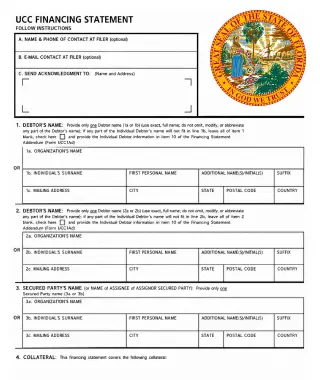
A Florida UCC-1 financing statement is a public notice filed by creditors to publicly record a security interest in a debtor's personal property or business assets. It establishes priority over other creditors in the event of default.
What is a UCC-1 Financing Statement? A UCC-1 financing statement is a legal document that serves as a public notice of a creditor's secured interest in personal property or assets, often used in secured loans, equipment financing, and commercial leases.
Why Does it Give Legal Notice Against Third Parties? A UCC-1 filing in Florida gives legal notice against third parties by creating a public record of a secured interest in a debtor's collateral. Under Florida Statute Chapter 679, it publicly perfects a lien, establishes creditor priority, and warns others of a pre-existing claim on assets.
What "Perfecting a Lien" Means and Why it Matters for Creditors: Perfecting a lien in Florida is the legal process of recording or filing a security interest in a debtor's property (collateral) with the appropriate government authority, such as a state agency or county office. It transforms a general claim into a legally secured interest, establishing priority over other creditors in bankruptcy or foreclosure proceedings.
Where Most Florida UCC Filings Go: Most Florida UCC filings are submitted to the Florida Secured Transaction Registry, which is maintained by the Florida Department of State (Division of Corporations). The vast majority of financing statements are filed electronically through the online portal, although mail and walk-in options are available in Tallahassee.
The Exceptions: Filings for fixtures, timber to be cut, or minerals (as-extracted collateral) must be filed locally with the clerk of the court in the county where the real estate is located. Although many business assets are filed centrally, specific vehicle, boat, or manufactured home titles may require filing with the relevant state department (e.g., the DMV).
What a FL UCC Search Reveals

A Florida state UCC search reveals active liens, security interests, and financial obligations secured by a borrower's personal property or business assets. You can search the Florida Secured Transaction Registry or third-party portals to identify secured creditors, the scope of collateral (e.g., equipment, inventory), and filing history, including amendments and terminations. The data revealed includes:
Debtor Name & Address - Legal name of the individual or entity borrowing against assets.
Secured Party Name - Names and addresses of creditors holding a security interest in the assets.
Collateral Description - Specific or blanket descriptions of assets pledged, such as "all assets," equipment, or inventory.
Filing Date - The original filing date, which establishes priority order when multiple creditors exist.
Lapse Date - The UCC filing lapse date, typically 5 years from the filing date, which will deactivate the lien.
Filing Number - A unique ID for retrieving certified copies or tracking amendments.
Amendments / Terminations - Any subsequent UCC-3 filings (assignments, amendments, or continuations) that alter the lien.
Assignees - Shows whether the original secured party has transferred its interest to another entity.
Why Do UCC Filings Matter in Florida?

Florida is considered a high-volume state for UCC filings, consistently ranked alongside Texas and New York as a major jurisdiction for secured transactions. UCC filings in Florida (UCC-1 financing statements) matter because they legally establish a creditor's priority claim to a debtor's collateral, ensuring they are first in line to get paid if a borrower defaults or goes bankrupt. In Florida, strict "zero-tolerance" rules apply, meaning that if a creditor makes an error in filing, the filing can be invalidated in its entirety.
Florida-based lenders file UCC-1 statements against borrowers nationwide, making Florida a crucial jurisdiction, even for out-of-state debtors and searchers. Although the Florida Secured Transaction Registry manages most UCC filings, some end up in county records offices and even other government agencies, making a UCC search in Florida complex.
Real estate and co-op transactions further complicate the issue with fixture filings and liens on shares and leases rather than real property. UCC searches for fixture filings, and co-ops must be thorough and include the county recorder's offices to uncover all relevant liens.
M&A due diligence in Florida under the Uniform Commercial Code involves a comprehensive search for liens and security interests filed against a target company's assets to identify undisclosed debt. This involves searching the Florida Secured Transaction Registry (and other states) for UCC-1 financing statements that indicate assets are pledged as collateral. This step is crucial to protect investors.
How to Run a FL UCC Search
To run a Florida UCC search, visit the Florida Secured Transaction Registry or use a third-party tool to search for financing statements by debtor name, secured party, or document number. You can generally search for free online to find records from 1997 to the present, and can often view TIFF images of filings.
Follow the steps below to run a state of Florida UCC search:
Step 1: Identify the Correct Debtor Name
Florida has very strict naming guidelines for UCC filings with a "zero tolerance" policy for errors. Therefore, before performing a UCC search in Florida, you must identify the exact debtor's name. Find their exact legal name because the database will not use any fuzzy matching or find names close to your search string. You can use partial names to enhance your results, but exact matches are more accurate. When searching for individuals, use the format "Last Name First Name Middle Name/Initial".
Step 2: Choose Your Search Method
You can run a UCC filing in Florida search using a few different methods. The first is online using the Florida Secured Transaction Registry. This is a free e-filing search portal that offers non-certified results. You can search by business debtor name, individual debtor name, document number, and a combination of organization/debtor name. You also have additional options to refine your search. You can also obtain certified copies by mail, by submitting a written request to FLORIDAUCC, LLC at P.O. Box 5588, Tallahassee, FL 32314. Include the debtor's name, or for pre-1997 records, the specific file number, and enclose payment by check or money order. Mail orders will take three days to process. An even more efficient method is to use an authorized search service to get records quickly, including both state and county records.
Step 3: Review the Search Results
Your search results will show active, lapsed, or all UCC filings based on your search criteria. Carefully review everything to ensure accuracy. Confirm the debtor's name and ensure it is not a coincidental match. Review the collateral description, match it to the encumbered assets, and check for "all assets" language that may affect what is included. Check the secured party's identity and confirm the filing/lapse dates to determine whether the lien is still current. Were any UCC-3 forms filed that affect the original lien? Check whether the original lien holder assigned it to a new party. When searching, don't just assume what you see is it; check and verify everything.
Step 4: Obtain Certified Copies If Required
Certified copies of UCC filings in Florida are typically needed for legal, financial, or due diligence purposes where an official, state-certified record of a lien is required, such as in lawsuits, loan closings, or business acquisitions. These documents verify the existence, priority, and details of security interests in business assets. Always order your certified copies early, as they can take 1-3 business days or longer. You will need to pay a fee per debtor name.
FL UCC Search for Out-of-State Businesses
The Uniform Commercial Code jurisdiction rules in Florida dictate which state's laws apply to commercial transactions and where a lender must file to secure their interest in collateral. For secured transactions, the debtor's location, not the collateral's, determines where to file the financing statement to perfect a security interest. If a company is incorporated in Florida or organized under Florida law, the UCC-1 must be filed with the Florida Secured Transaction Registry, regardless of where the collateral is located. If the debtor is an individual, the law of the state where they live applies.
Florida matters significantly for out-of-state debtors and creditors because of its strict, no-tolerance policy for errors in Uniform Commercial Code filings, combined with its popularity as a debtor-friendly safe haven for assets. The Florida Supreme Court requires precise legal names on filings, meaning minor misspellings can invalidate a creditor's security interest. Debtors often relocate to Florida to take advantage of its unlimited homestead exemption, which protects their primary residence from judgment creditors. Out-of-state judgments must be "domesticated" in Florida to be enforceable against local assets. Under the Florida Enforcement of Foreign Judgments Act, creditors can use Florida courts to collect on foreign judgments.
To conduct a UCC search in Florida as an out-of-state business, use the online Florida Secured Transaction Registry to search by debtor name, secured party, or file number. Be sure to use the exact legal name of the debtor and, for due diligence, conduct searches using spelling variations or former names to ensure accuracy and efficiency.
UCC Forms and Filing Duration in Florida

Below are the UCC forms used in Florida for filings, continuations, amendments, changes, terminations, and requests.
UCC-1 (Financing Statement): The initial filing used to officially record a lien against a debtor's assets (collateral).
UCC-1Ad (Addendum): An addendum used with the UCC-1 when additional space is required to list additional debtors or secured parties, provide a longer collateral description, or if the filing is a fixture filing (collateral attached to real estate).
UCC-3 (Amendment/Continuation): A multi-purpose form used to continue, terminate, amend the original filing, or assign liens to new parties.
UCC-3Ad (Termination): Similar to the UCC-1Ad, this is used to provide additional information, such as extra party names or collateral descriptions, when filing a UCC-3 amendment.
UCC-5 (Information Statement): Filed if a person believes an inaccurate or unauthorized record was filed against them.
UCC-11 (Information Request): Used to search existing records for a specific debtor to check for prior liens.
How Long Are Florida UCC Filings Effective?
In Florida, UCC-1 financing statements are generally effective for five years from the date of filing. To maintain a perfected security interest beyond this period, a continuation statement must be filed within 6 months of the 5-year expiration date. If not continued, the filing lapses, and the secured party loses priority. However, filings remain effective based on their status and other criteria as explained below:
Standard Lapse: Five years from the date of filing. A lien with no continuation filed before the lapse date is extinguished/dead.
Continuation: A continuation statement (UCC-3) must be filed within the 6-month window immediately preceding the 5-year expiration date to extend its effectiveness by another five years. If anything is filed outside this window, the lien filing will lapse.
Deceased Debtor: In Florida, a UCC-1 financing statement generally remains effective for five years from the date of filing, even if the debtor dies. The death of a debtor does not automatically shorten the UCC filing's lifespan; however, creditors must still navigate Florida's probate "hard bar" rule, which generally limits claims against an estate to two years after death.
Manufactured Homes: If the initial financing statement indicates it is filed in connection with a manufactured-home transaction, it is effective for 30 years.
"All Assets" Lien: Florida UCC-1 financing statements, including those covering "all assets" (all-assets lien), are effective for five years from the date of filing. The "all assets" description does not extend this duration; the filing will lapse after five years unless a continuation statement is filed within six months before expiration.
What Happens When a FL UCC Filing Lapses

When a Florida UCC-1 financing statement lapses without a timely continuation filed within the designated six-month window, the security interest becomes unperfected as a matter of law, losing its priority position. The original secured party does not automatically retain its original Florida rights, and the interest is deemed never to have been perfected against purchasers for value. To re-perfect, they must file a new UCC-1, which resets their priority clock to the new filing date rather than the original filing date, potentially losing top-priority status. This has a direct impact on lien searches: a searcher who finds a filing with a past lapse date must check whether a continuation was filed before that date. Therefore, when reviewing search results, never assume that a past-lapse-date filing means the lien is dead without verifying that there is no continuation.
UCC Lien Priority Explained
In Florida, UCC lien priority generally follows the "first-to-file-or-perfect" rule, meaning the first creditor to properly file a UCC-1 financing statement with the Florida Secured Transaction Registry obtains senior priority. This rule, found in Florida Statute 679.322, dictates that priority is often established before money is even loaned or a security interest attaches, provided a financing statement is filed first. A perfected security interest, meaning it has attached and a financing statement is filed, takes precedence over unperfected interests and most subsequent creditors.
Some complications in Florida include the "no safe harbor" rule for incorrect debtor names, meaning a minor misspelling can invalidate a lien if the state's specific registry search does not reveal it. Additionally, Purchase Money Security Interests (PMSI) in collateral other than inventory can jump ahead of earlier filed blanket liens if perfected within 20 days of the debtor receiving the goods. Other exceptions involve superior rights for possessory liens (like mechanic's liens) and agricultural liens that may skip ahead of earlier filings.
This strict priority structure drives the search decision, as lenders must identify prior filings to assess the risk of non-payment in the event of a debtor's default. Because a first-priority lien holds the superior right to collateral proceeds, conducting a thorough search of the debtor's exact legal name, and often prior names, is essential to confirm there is no "first-in-time" creditor already in place. Failing to do so can result in a creditor, such as a bank, holding a second-position, less valuable interest.
Who Needs a FL UCC Search
A Florida UCC search is required by lenders, buyers, and legal professionals to identify existing liens on a business's personal property or assets, ensuring a clear title and evaluating risk. These searches are critical in business acquisitions, financing deals, and commercial real estate transactions involving equipment or inventory. Review the use cases below for further details.
Lenders and Financial Institutions

Commercial banks, asset-based lenders, factoring companies, equipment lenders, and other financial institutions in Florida conduct UCC searches to identify existing liens on a borrower's assets, establish priority for secured loans, and mitigate the risk of losing collateral, especially given the state's specific "safe-harbor" risks related to debtor name errors. These searches, conducted through the Florida Secured Transaction Registry or commercial search services, are crucial for performing due diligence to ensure that prior, undisclosed lenders do not jeopardize a creditor's legal claim to assets such as inventory or equipment. When lending money, the risk is high, and banks must thoroughly research UCC filings to make sure the collateral isn't already spoken for. Using EntityCheck, you can get fast, accurate search results of both state and county-level filings.
Attorneys and Legal Professionals

Legal professionals in Florida (M&A, bankruptcy, litigation, and real estate attorneys) use UCC searches to identify existing liens or security interests on a debtor's personal property or business assets (collateral). These searches are critical during due diligence for business acquisitions, financing, and secured transactions to evaluate collateral availability, determine lender priority, and reveal undisclosed debt. It comes into play during commercial closings with fixture filings, identifying encumbrances on judgment debtors, and other issues related to real estate and personal property. Proper due diligence can prevent issues arising from a debtor's bankruptcy and affect creditor priority. The good news is that using EntityCheck to search UCC filings will uncover not only state filings but also county (including judgments and federal liens).
Businesses and Buyers

Companies that buy equipment, business assets, franchise buyers, and other businesses also use UCC searches to check if the assets are already encumbered. Some companies check their own status before borrowing money, as it can prevent new loans if old liens show up (for paid-off assets). Without first performing a UCC search, you could end up inheriting the seller's encumbered assets and liens. Since some items may be recorded with county records rather than state records, you must perform a comprehensive search. EntityCheck makes this easy by combining data from state and county databases into a single, easy-to-use search platform.
Real Estate Professionals

Florida real estate professionals use UCC searches typically for due diligence to identify liens on personal property (fixtures) attached to real estate (such as HVAC systems, solar panels, or hotel furniture) before closing. Co-op transaction participants, real estate closing attorneys, and lenders on mixed-use properties also search Florida Secured Transaction Registry records to confirm clear title, establish lender priority, and prevent buyers from acquiring assets subject to undisclosed debt. A title search alone will not uncover UCC filings and liens, especially through county sources. Thankfully, a single search with EntityCheck will show you both state and county UCC filings, covering all your bases.
Individual Debtors and Business Owners

Florida debtors and business owners use UCC searches to verify existing liens on personal property and ensure the accuracy of filed financing statements. Due to Florida's strict "zero-tolerance" policy for misnamed debtors, these searches are crucial for confirming that filings are properly indexed, as even minor errors can render a lien ineffective. Debtors and business owners must verify that a lien has been released upon payoff, as existing liens can block new financing or complicate a sale. A quick search on EntityCheck will show you liens from both state and county databases, streamlining your efforts and saving you time.
Florida-Specific UCC Considerations

Florida has adopted the Uniform Commercial Code (UCC) in Chapters 671-680 of the Florida Statutes, but it includes several state-specific nuances, particularly regarding filing procedures, debtor naming, and documentation taxes. See more details below about these Florida-specific considerations.
"Zero-Tolerance" Filing System
Florida is notoriously strict about the accuracy of debtor names on UCC-1 financing statements, particularly for registered organizations (corporations and LLCs). The debtor's name must match the name on their official, unexpired Florida driver's license or state ID. For organizations, it must match the "public organic record" (articles of organization) filed with the Florida Secretary of State.
Studies show that a significant percentage of filings against organizations in Florida are ineffective due to minor name errors. A typo in a UCC-1 can result in a loss of perfection and priority.
Unlike some states, Florida's registry does not provide safe-harbor protection for minor errors in a debtor's name.
Centralized Filing and the Florida Secured Transaction Registry
While many states follow the IACA (International Association of Corporate Administrators) standards, Florida uses a centralized, contractor-operated system.
Almost all UCC-1, UCC-3 (amendments/continuations), and UCC-5 (corrections) filings must be submitted to the Florida Secured Transaction Registry through the Florida Department of State.
While most filings are centralized, filings against fixtures, timber, or minerals often require a local, county-level filing in addition to the state-level filing.
Documentary Stamp Tax Considerations
Florida imposes a documentary stamp tax on certain documents, including security agreements that evidence a debt.
While a UCC-1 can be filed without paying the tax, the lender may be unable to enforce the security interest in a Florida court until the tax is paid.
Other Florida Specifics
Florida UCC filings are good for five years. A continuation statement must be filed within the six-month window before the five-year expiration date. It cannot be filed earlier. Upon satisfaction of a debt, the debtor can make a written demand for a termination statement. The secured party must file the termination (UCC-3) within 20 days.
"Battle of the Forms": Under Florida Statute § 672.207, a contract for the sale of goods can be formed even when the buyer and seller have conflicting terms, which differs from traditional common law.
"Predominant Factor" Test: When a contract involves both goods and services, Florida courts apply this test to determine if the UCC applies. If the primary purpose is the sale of goods, the UCC governs.
FL Co-Op Financing and UCC Filings
Co-ops are unique living arrangements in Florida in which a buyer purchases a leasehold and shares in a corporation rather than real property. Florida co-op financing works by treating the apartment as personal property (shares and a proprietary lease) rather than real estate, with loans secured by UCC-1 filings. Lenders file a UCC-1 financing statement with the Florida Secured Transaction Registry to perfect their security interest and ensure priority over other creditors. Before buying a co-op, it's essential to review UCC filings to ensure the previous lien has been satisfied (paid off) and that there are no additional encumbrances (fixture filings - filed with the county) that affect the property. EntityCheck makes this due diligence easier by combining state and county databases into one easy-to-use search portal. See instant results with a single search string.
Agricultural Liens in Florida
Agricultural liens in Florida are statutory interests in farm products (such as crops, livestock, or timber) that secure payment for goods, services, or rent provided to a farmer. These liens, often used by suppliers and landlords, are created by law without the debtor's consent and do not require the creditor to take possession of the property. Florida statutes (83.08) – "a landlord has a lien on agricultural products raised on rented land for the current year's rent". This lien is often superior to all other, earlier-dated liens. Providers of seed, fertilizer, or labor can file liens to secure payment. To ensure validity against other creditors, these liens must often be perfected by filing a UCC-1 financing statement. Priority generally follows the order of filing, though statutory landlord liens may take precedence. These liens are also filed through the Florida Secured Transaction Registry, and you can easily find them using an EntityCheck UCC filing search.
Federal Tax Liens - A Separate Search Required
Federal tax liens in Florida arise automatically when the IRS assesses a tax debt, sends a bill (Notice and Demand for Payment), and the taxpayer fails to pay in full. This "secret lien" attaches to all property, including real estate and personal assets. The IRS files a Notice of Federal Tax Lien in the county where the debtor resides to notify creditors and secure priority. The IRS governs federal tax liens; they are not part of the Florida Secured Transaction Registry, and UCC filings will not show them. Instead, you must search county databases (where fixture filings are also recorded) to find federal tax liens on property in Florida. Before any transaction that may put you at financial risk, be sure to conduct thorough due diligence, including state and county searches. EntityCheck aggregates data from both types of databases, allowing you to search once and find everything you need.
Judgment Lien vs. UCC Lien
A judgment lien is a non-consensual legal claim placed on a debtor's property after a creditor wins a lawsuit, attaching most often to real estate. Unlike a consensual UCC lien that businesses use to secure loans against personal property, a judgment lien is a forced encumbrance indicating a debt default. Although UCC liens target equipment or inventory, judgment liens often allow creditors to foreclose on property to satisfy the court-ordered debt.
In Florida, you can search for judgment liens by reviewing the Florida Department of State's judgment lien filing system for personal property, as well as the official records of specific county clerks where the debtor owns real estate.
Understanding the difference helps you determine whether you are looking at a routine commercial filing or a serious, court-ordered threat to property assets.
Florida UCC Search - Common Mistakes to Avoid
When conducting a UCC search, you must be precise, as even tiny mistakes can cause you to miss crucial liens attached to property. Some of the most common mistakes to avoid in Florida are as follows:
Searching only the Florida state database and missing county-level fixture filings - Never assume you are seeing the whole picture when searching only state-level filings. Always check county records as well, or you may mix fixture filings or other county-filed liens.
Using an incorrect or abbreviated debtor name variation - Florida is a strict name state, and you must use the absolutely correct debtor name to find liens. If you use an incorrect or abbreviated name, you may not find active liens associated with that debtor. Never rely on a Certificate of Good Standing to find the name. Instead, use the original Articles of Incorporation or company charter to determine the exact legal name.
Assuming a filing past its lapse date is automatically extinguished - Even if you see a filing with a past lapse date, never assume it is correct. Keep checking to see if a continuance was filed or if other UCC-3s have been filed that may alter or terminate the lien.
Failing to search all debtor name variations - Failing to search for variations in spelling, punctuation, or abbreviations (e.g., searching "Co." instead of "Company") can hide critical filings. Neglecting to check previous names or name variations for both individuals and businesses is also a mistake and can cause you to miss filings.
Not ordering certified copies when the transaction requires them - Many Florida transactions (including co-op purchases, court filings, and real estate closings) require UCC filing documents, which accept only certified copies. Always order your certified copies early and allow for wait times. You cannot get them instantly; processing usually takes a few days, and you must pay a fee. If you fail to get them in time, it could delay your closing.
Treating a UCC search as a substitute for a federal tax lien search - Federal tax liens are completely separate from UCC liens, and you will not find them performing a standard UCC filing search. You must search both state and county databases (where federal liens are filed) to find everything.
Why Use EntityCheck for Your FL UCC Search
Florida is another high-volume state for UCC filings, making it a crucial destination for searchers. Not only are most UCC filings recorded with the Florida Secured Transaction Registry, but fixture filings are recorded at the county level with county recorders, and, of course, federal liens are recorded at the federal level. All of this makes a UCC search in Florida complex, and if you don't search all available databases, you could miss critical liens that affect your company.
Manual searches take time and often money. To perform proper due diligence, you must thoroughly search all locations, which can be time-consuming, confusing, and yet still yield inaccurate results. EntityCheck offers a better, faster solution. Our search tool combines data from all state, county, and federal databases and allows unlimited searches. You get the right information at your fingertips when you need it, without the hassle of going through the Florida Secured Transaction Registry, multiple county websites, and related government agencies. Try a free search today.
FAQ
How long does a Florida UCC search take?
You can search online using the Florida Secured Transaction Registry or commercial services and find immediate results for active filings. However, when ordering official, certified copies, processing can take 3-5 days. New documents get filed and appear in the database within 1-3 days.
How do I search UCC filings in Florida?
To search UCC filings in Florida, use the Florida Secured Transaction Registry online database or EntityCheck to locate financing statements, amendments, and terminations. You can search by debtor name, document number, or through secured party searches to find records dating back to 1997.
How far back do Florida UCC records go?
Florida UCC records showing secured transactions and liens are available online from 1997 to the present. They are filed with the official Florida Secured Transaction Registry. For records before 1997, you can contact the state and request them from the archives department, or use a private vendor that stores old UCC filings.
What is the difference between a state and a county UCC search?
The primary difference between a state and county Uniform Commercial Code search in Florida lies in the type of collateral being secured and the recording office. Florida utilizes a centralized state-level system for most business assets, while county searches are generally reserved for real estate-related items (fixtures). Federal liens also get filed with the county recorders.
How do I remove or terminate a UCC lien in Florida?
To remove or terminate a UCC lien in Florida, you must file a UCC-3 Termination Statement with the Florida Secured Transaction Registry, usually after fully paying off the loan/debt. If the lender fails to file it, you can send an authenticated demand letter requiring them to file it within 20 days, or file it yourself if necessary.
Are Florida UCC filings public record?
Yes, Florida UCC filings are public records. They are maintained by the Florida Secured Transaction Registry, which allows the public to search, view, and print financing statements, amendments, and other related documents. These records are searchable online through the official, dedicated website and other reliable, authorized sources.
Do I need a UCC search for a Florida co-op apartment purchase?
Yes, you should conduct a co-op lien search, including a UCC search, when buying a Florida co-op apartment. Because co-ops are personal property (shares + lease), not real estate, a UCC search reveals if the seller has outstanding loans, liens, or judgments against their shares and lease.
What is a UCC-1 vs. a UCC-3 in Florida?
In Florida, a UCC-1 is the initial filing that publicly records a lender's security interest in a borrower's assets. A UCC-3 is a follow-up form used to update, extend (continuation), or terminate the original UCC-1. Both are crucial for securing loans: the UCC-1 creates the lien, and the UCC-3 manages it throughout its lifecycle.
Can I search UCC filings by a secured party?
Yes, you can search Florida UCC filings by a secured party name through the Florida Secured Transaction Registry. The official, centralized online system allows searching by secured party, debtor name, or file number to identify existing liens on collateral.
What counties in Florida require a separate UCC search?
In Florida, while most UCC filings are centralized at the state level, you must perform a separate search and filing at the local county level for specific types of collateral, namely fixtures, timber to be cut, or as-extracted (minerals/gas/etc.) collateral.
How much does an FL UCC search cost?
A Florida UCC search through the Florida Secured Transaction Registry typically costs $25 per debtor name searched. This official search, conducted through the Department of State, allows you to verify existing liens on a debtor or collateral, while copies of documents may incur additional fees. Certified copies cost $10 per document + $1 per page, or $1 per page + $2 to certify.
Is a UCC search the same as a title search?
No, a Florida UCC search is not the same as a title search. While both are important due diligence tools in real estate and business transactions, a UCC search identifies liens on personal property/business assets (e.g., equipment) filed in the state registry, whereas a title search investigates ownership and liens against real property (land and buildings) in county records.