Search California UCC Filings & Liens
A UCC search in California involves reviewing public records filed with the Secretary of State to identify existing liens or security interests placed on a business's personal property. It reveals whether creditors have filed UCC-1 financing statements asserting a legal claim to assets such as inventory or equipment, which helps lenders and buyers assess risks during the due diligence process. These searches are critical for confirming that collateral is not already pledged to another party and for determining priority in the event of default. Although you can check with the state and individual counties, a faster, better way is to use EntityCheck, a robust database that consolidates all that data into one easy-to-use platform, making a California UCC search easier.
What Is a UCC-1 Financing Statement?
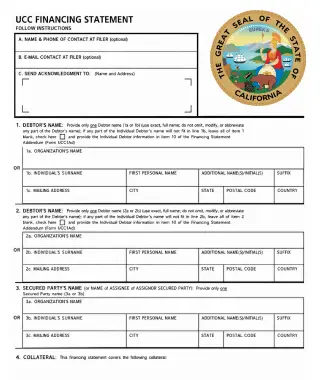
A UCC-1 financing statement in California is a legal document filed by lenders with the California Secretary of State to publicly announce a lien on a borrower's business assets (collateral) to secure a loan. It creates a secured interest, giving the lender priority over other creditors if the borrower defaults. The lien can be tied to specific collateral or "all assets".
What is a UCC-1 Financing Statement? A UCC-1 financing statement is a legal form that creates a public notice filed by creditors, establishing their legal right to a borrower's business assets if the borrower defaults.
Why Does it Give Legal Notice Against Third Parties? A UCC-1 Financing Statement in California provides public, legal notice (searchable public record) by perfecting a creditor's security interest under the Uniform Commercial Code, establishing priority over other creditors in the event of default or bankruptcy.
What "Perfecting a Lien" Means and Why it Matters for Creditors: Perfecting a lien in California is the legal process of formally recording or securing a creditor's interest in a debtor's property (collateral) to establish priority over other creditors. It is crucial because a perfected lien (e.g., via a UCC-1 filing or a deed of trust) ensures the creditor has superior rights to seize or be paid from the collateral if the debtor defaults or files for bankruptcy.
Where Most California UCC Filings Go: Most California UCC filings are submitted centrally to the California Secretary of State via the BizFile Online portal. This office handles the majority of financing statements (UCC-1) to perfect security interests.
The Exceptions: If the collateral involves fixtures to real property, the filing must be made with the Los Angeles County Recorder's Office or the county recorder's office where the property is located.
What a CA UCC Search Reveals

A state of California UCC search will reveal the following data:
Debtor Name & Address - The exact registered name of the business or individual pledged assets, along with the company's legal address.
Secured Party Name - The lender, bank, or vendor who holds the security interest. This identifies who has a claim on the assets and must be paid off or waived if a new lender is taking a first-priority position.
Collateral Description - A description of the assets securing the loan (e.g., "all assets," "all equipment," "accounts receivable," or specific inventory). "All assets" indicates a blanket lien covering everything the debtor owns.
Filing Date - The date the original security interest was filed. This is crucial for determining priority; the first to file typically has the first claim to the collateral.
Lapse Date - The date the financing statement expires (usually 5 years from filing). Secured parties must file a continuation within 6 months before this date to maintain their priority.
Filing Number - A unique identification number assigned by the California Secretary of State to every document filed (UCC-1 or UCC-3). It is used to track the specific filing.
Amendments / Terminations - Related filings that change the original record, such as changing the debtor's name, adding/removing collateral, or transferring the security interest to a new lender (assignment).
Assignees - If the lien has been transferred to another party (not the original filing party), the data will list the new owner(s)/assignees who have a security interest in the collateral.
Why Do UCC Filings Matter in California?

Along with other states, California is a high-volume UCC filer. It is considered one of the top jurisdictions in the US, along with Texas, Florida, and New York, for Uniform Commercial Code financing statements and lien filings. California handles massive volumes of UCC-1 filings; in some cases, over 4,000 filings are analyzed in a single week.
UCC filings in California are managed by the California Secretary of State's Business Programs Division, primarily through their "BizFile" online portal, which provides real-time processing. A substantial portion of these California filings includes agricultural equipment, solar lenders, and Merchant Cash Advance (MCA) liens, making the state a major location for commercial secured transactions, even for out-of-state debtors.
Due to the high number of UCC liens and Merchant Cash Advance (MCA) filings in California, it is a notable state for creditors monitoring security interests and for businesses undergoing financial underwriting. A California Secretary of State UCC search is vital across high-stakes industries, including secured lending, equipment leasing, and asset-backed transactions, to verify lien priority. Some sectors that require these searches include financial services, renewable energy (solar), commercial manufacturing, construction, and agriculture.
How to Run a CA UCC Search
A UCC search in California is crucial to protecting your interests. Follow the steps below to perform a California state UCC search.
Step 1: Identify the Correct Debtor Name
UCC filing data is name-exact, meaning you must identify the exact correct debtor's name, or you may see no results even when an individual or business exists in the database. Even a slight variation (missing middle initial, comma placement, or incorrect DBA) can skew your results. When searching for individuals, be sure to use the correct format (Last, First, Middle). You can also search by file number if you have it.
Step 2: Choose Your Search Method
When performing a UCC filing California search, you have some options available. You can use the California Secretary of State UCC Connect web portal to search there. The free search will return non-certified results suitable for a preliminary review.
You can use the California BizFile portal to order certified copies ($20 per debtor name), which are available within 2-3 days. You can also mail in an order for certified copies, but it generally takes longer (5-10 business days).
For the fastest turnaround, including certified results, you can use an authorized UCC search service that handles both state and county filings simultaneously. Fixture filings are recorded with the county rather than the state, so it's essential to check both for complete results.
Step 3: Review the Search Results
After running the search, carefully review the results. You can view or download PDF images of the UCC filings and associated liens (tax liens, judgment liens). Confirm that the debtor's name is correct and matches your search (watch for coincidental matches). Compare the collateral description to the assets that are encumbered, and determine whether "all assets" are included or only specific items. Confirm the secured party identity and review the filing/lapse dates to ensure the lien is current. Look for any amendments or continuations that may extend beyond the initial filing. In some cases, liens get transferred to other parties; review the records carefully for any assignments that change the lien holder to someone other than the original party.
Step 4: Obtain Certified Copies If Required
Certified copies of UCC filings are required in California, typically for legal verification in legal proceedings, for due diligence, or to prove the lien's status to a financial institution (such as when a loan is paid off). Certified copies carry the official California Secretary of State's seal and are crucial for certain court filings, real estate closings, and other regulatory submissions. Use non-certified results from the online portal when conducting internal research, but for any official verification, you must purchase certified copies of UCC filings. You can obtain certified copies within 1-3 days or 5-10 if you order by mail. You must pay a fee per debtor. Other instances where you need certified copies include:
Bank/Lender Underwriting: When a new lender needs to verify existing liens on a company's assets during refinancing or loan applications.
Merchant Cash Advance (MCA) Disputes: When proving that a secured interest exists and has priority over other creditors in a lawsuit.
Business Litigation: To verify the exact, authorized text of a filed UCC-1 financing statement.
Foreign Qualification: When filing to do business in another state, the new state may require a certified copy of the original California filing.
Proof of Termination: When providing formal proof to investors or banks that a lien has been satisfied and closed out.
CA UCC Search for Out-of-State Businesses
To perform a California UCC search for out-of-state businesses, you will search the California Secretary of State's UCC filings to identify if a foreign entity has pledged assets as collateral in California, which are normally filed in the state of incorporation. California follows the jurisdictional rules under Article 9 of the Uniform Commercial Code (UCC), which determines where to file a financing statement to perfect a security interest. Generally, for registered organizations like corporations or LLCs, the filing must be made in the state where the debtor is organized. In contrast, for individuals, it must be made in the state of residence.
California is a hugely heavy state for UCC filings and, therefore, a key search state for out-of-state debtors and businesses. If the collateral is related to real property (fixtures), a filing may also be necessary in the local county recorder's office. Searching California UCC records helps lenders, buyers, or partners identify existing liens (security interests) against an out-of-state company's California-based assets before engaging in business.
To perform a UCC search for out-of-state businesses, search the California Secretary of State website in the state where the entity was incorporated, as that is the authorized filing location. Search by the debtor's exact legal name as it appears on their formation documents. A more efficient approach is to use a third-party UCC search tool or service that aggregates records nationwide and supports partial name searches to capture variations.
UCC Forms and Filing Duration in California

The forms used for UCC filings in California are as follows:
UCC-1 (Financing Statement): Initiates a public record of a security interest in a debtor's collateral to establish creditor priority and perfect an interest.
UCC-1Ad (Addendum): Provides additional space for listing multiple debtors, secured parties, or detailed collateral.
UCC-3 (Amendment/Continuation): Modifies, extends, or terminates an existing UCC-1 filing.
UCC-3Ad (Termination): Officially removes a lien from public records once the debt is paid.
UCC-11 (Information Request): Used to search the California Secretary of State database for existing liens against a specific debtor.
How Long Are California UCC Filings Effective
California UCC filings remain effective depending on the status and documents filed. Use the list below to determine.
Standard Lapse: In California, Uniform Commercial Code financing statements are generally effective for five years from the date of filing. After the initial five-year period, the filing automatically lapses, and the secured party loses its "perfected" status and priority over other creditors.
Continuation: To maintain a security interest beyond the five-year mark, the secured party must file a UCC-3 Continuation Statement. The Continuation Statement must be filed within 6 months of the 5-year expiration date, not before. Each properly filed Continuation Statement extends the effectiveness of the original filing for an additional five years, starting on the date the original filing would have lapsed. There is no limit on the number of times a filing can be continued, provided the underlying debt still exists.
Deceased Debtor: In California, a UCC filing remains effective for its original 5-year term even if the debtor dies, but the creditor must file a claim against the estate within one year of the date of death to enforce the debt. The death of a debtor triggers California Code of Civil Procedure § 366.2, limiting debt collection actions to one year.
Manufactured Homes: These filings are effective for 30 years.
"All Assets" Lien: In California, "all assets" (or blanket) UCC-1 financing statements are effective for five years from the date of filing. The "all assets" language means the lien covers all collateral, not specific items, and has nothing to do with the time frame.
What Happens When a CA UCC Filing Lapses

When a California UCC-1 filing lapses (typically after five years), the secured party loses its perfected status, priority position, and the security interest becomes unperfected. The lender becomes a general unsecured creditor, risking loss of collateral priority to other creditors, trustees in bankruptcy, or purchasers for value. A lapsed filing cannot be renewed; a new UCC-1 filing must be filed to re-perfect the interest, which resets the priority date to the new filing date, which might be after others have filed on the same assets. If a bankruptcy occurs after the lapse, the creditor is treated as an unsecured creditor, potentially losing the ability to re-perfect to secure a higher claim.
Lapses can drastically affect UCC filing California searches because a searcher may find a lien that has lapsed, but they must continue searching to see if a new filing was recorded, replacing the old one. Always search carefully and don't assume that a post-lapse-date filing is the end of it. Verify any continuations or new filings that replace lapsed documents.
UCC Lien Priority Explained
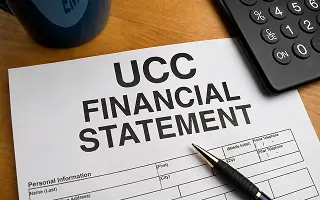
In California, UCC lien priority is generally governed by the "first-to-file" rule, under which the first creditor to properly file a UCC-1 financing statement with the Secretary of State typically holds a senior lien position. This creates a clear, public timeline for lenders to establish their ranking of collateral, such as equipment, inventory, or accounts receivable.
Complications, however, can disrupt this order, such as a Purchase Money Security Interest (PMSI) giving a lender "super-priority" over earlier-filed liens if they financed the specific collateral and met strict notification requirements. Additionally, tax liens, certain statutory liens, and issues with debtor name changes or collateral descriptions can invalidate a filing or allow a later interest to take priority.
Because of these nuances, a comprehensive UCC search is critical for due diligence, as lenders must identify any existing senior interests or potential PMSI windows to avoid being a junior lienholder. Understanding the current "lien landscape" allows creditors to assess risks properly, negotiate subordination agreements, or adjust their lending terms.
Who Needs a CA UCC Search
Review the use cases below to fully understand who needs to search for UCC filings and how it benefits them to do so.
Lenders and Financial Institutions

Lenders and financial institutions such as commercial banks, asset-based lenders, factoring companies, and equipment lenders perform UCC searches to manage risk, verify that collateral is not already pledged to another creditor (preventing debt stacking), and establish their priority position (lien priority) in the event of a borrower's default or bankruptcy. These searches are critical for due diligence to ensure that the lender's interest in the borrower's assets is secure and properly filed. A search can be crucial before closing a loan. Lenders review UCC filings to avoid fraudulent behavior, such as a borrower using the same collateral for multiple loans. For the most efficient searches, lenders rely on professional services like EntityCheck for fast, accurate results.
Attorneys and Legal Professionals

California attorneys and legal professionals (specifically bankruptcy and real estate attorneys) use Uniform Commercial Code searches to conduct due diligence, mitigating risk in secured transactions by identifying existing liens, claims, or security interests against a debtor's assets. Litigation attorneys identify encumbrances on judgment debtors. These searches ensure a lender's priority in collateral, confirm the accuracy of financing statements, and protect against potential borrower bankruptcy or fraud. Failing to perform a UCC filing search could result in financial losses, liability, or legal exposure by missing an undisclosed secured creditor. Using a professional UCC filing search service, you can quickly and easily see all liens associated with a debtor, simultaneously combining state and county sources.
Businesses and Buyers

California businesses and buyers search UCC filings when conducting due diligence before purchasing business assets. These may include franchise buyers, business owners checking their own status, and suppliers extending business credit. A UCC search reveals whether a company's assets (equipment, inventory, receivables) are used as collateral for debt, helping buyers avoid hidden liabilities and worthless equipment. If an individual purchases a business with encumbered assets, the investment is significantly devalued. A thorough UCC filing search can help avoid that situation. Some liens extend beyond the state and county into federal liens. Only with a professional, authorized UCC filing search service can you find all liens in one place.
Real Estate Professionals

Real estate professionals conduct UCC filing searches, essentially checking for "dibs" on a property's personal property, to identify existing liens, secure loan priority, and uncover hidden liabilities before closing. These searches, often conducted with tools from providers such as EntityCheck, protect lenders and buyers from inheriting debt secured by equipment, appliances, or fixtures. Real estate closing attorneys, co-op transaction participants, lenders on mixed-use properties, and other real estate professionals need reliable UCC filing data to avoid loss. UCC filings often cover "fixtures", goods that are attached to real estate, such as HVAC units, lighting systems, or commercial kitchen equipment. A UCC search distinguishes what is truly part of the real estate and what is considered personal property owned by another party. EntityCheck can provide a quick and easy UCC filing report to fill in all the blanks.
Individual Debtors and Business Owners

Individual debtors and business owners use UCC filing searches to conduct due diligence and identify existing liens or security interests on assets (such as inventory and equipment). Businesses use this to assess risk before extending credit or acquiring assets, while individuals monitor for inaccurate filings or potential fraud. For example, if a loan is paid off and the UCC records still show an open lien, the individual can take steps to clear it. An open lien from a paid-off loan can block new financing or complicate a real estate or business sale. Individuals and businesses can easily use EntityCheck to quickly determine whether liens have been released or remain on collateral.
California-Specific UCC Considerations

California has adopted the Uniform Commercial Code, codified as the California Commercial Code (Division 9, Sections 9101-9709), but it includes several state-specific modifications, procedural quirks, and unique legal interpretations that distinguish it from other states. These nuances mainly impact filing locations, debtor name accuracy, and the handling of specific types of collateral. California-specific UCC considerations are detailed below.
Unique Filing Locations and Procedures
Although the California Secretary of State (SOS) in Sacramento is the central repository for most UCC-1 financing statements, certain filings must be made with the county recorder's office (Registrar-Recorder/County Clerk).
Goods that are or are to become fixtures, timber to be cut, and minerals (including oil and gas) must be filed in the county where the debtor resides or where the collateral is located.
Additionally, California requires electronic submission of UCC filings through its online portal, BizFile Online, for most filings, streamlining the process compared to paper submissions. This same portal is where the public can search for UCC filings.
Unlike some jurisdictions, California UCC-1 forms do not require the debtor's signature, although the underlying security agreement (the contract) must still be signed.
When searching for UCC liens in California, searchers should consider the time required to search both counties and the state, and instead opt for an authorized UCC filing search service.
Strict Debtor Name Requirements
California law (Commercial Code § 9503) is rigid regarding the debtor's legal name, particularly for registered organizations. The debtor's name must match its Articles of Incorporation or Certificate of Organization precisely. Minor errors, such as using "Co." instead of "Company," can render a filing "seriously misleading" and therefore invalid.
Filings for individuals should use the name on their driver's license or government-issued ID, rather than the name on their birth certificate, if they differ.
"Hidden" and Non-Recordable Liens
California law permits various liens that do not show up in a standard UCC-1 search, which can be a major risk factor. Some statutory, tax, or judgment liens under California law can have priority over a properly filed UCC-1 security interest, even if the UCC filing was first in time.
California law provides strong protections for specific types of processors and agricultural producers, creating unique liens that may not be immediately apparent. If the agricultural lien is attached to real estate (a "fixture filing," such as irrigation equipment or a silo), it may be recorded at the local county recorder's office where the land is located.
Collateral Descriptions
California follows the UCC "reasonable identification" rule, but due to the state's high litigation risk, it is standard practice to be highly specific.
In California, instead of using "all equipment" collateral descriptions for items like heavy equipment, aircraft, or vehicles, the state strongly recommends using serial numbers, VINs, and specific model information.
UCC Lien Perfection and Maintenance
UCC-1 filings in California are effective for exactly five years. A Continuation Statement (UCC-3) must be filed within the six-month window before the five-year expiration date. A day too early or one day late can cause the filing to lapse and lose priority.
If a debt is paid off, the lender must file a termination statement.
Other Special Considerations
California law (Commercial Code § 9102) has detailed provisions for consignments. If you are delivering goods to a merchant for sale, you must file a UCC-1 to protect your interest, or you risk the goods being seized by the consignee's creditors.
California has seen a surge in "layered" UCC filings involving MCA transactions, in which the UCC filing serves as a key element of the contract, making detailed analysis of existing filings vital for banks and lenders.
Federal Tax Liens - A Separate Search Required
Federal tax liens are not part of the Uniform Commercial Code, and public records related to them are not combined. You will not find federal tax liens when searching the California UCC database. These are completely different types of liens filed with the county clerk in the county where the debtor resides or the principal place of business.
Anyone searching for liens with a strict due diligence purpose should understand this and perform a complete state UCC lien search, as well as a county clerk's UCC search for fixture filings, and on top of that, an additional federal tax lien search.
To make this easier, EntityCheck culls data from state, federal, and county databases, aggregating it into a single, easy-to-use platform, making it fast and efficient to find all liens attached to an individual or business.
Judgment Lien vs. UCC Lien
A judgment lien is an involuntary, court-ordered claim on a debtor's real estate or personal property, arising from a lost lawsuit. In contrast, a UCC lien is a consensual security interest against business assets filed with the state. Unlike UCC liens, which appear on a Secretary of State search, judgment liens are often filed in the local county records.
To search for California judgment liens, check the California Secretary of State's website for property liens on personal property (Form JL-1) and search the individual county recorder's office for judgments attaching to real estate.
The key to understanding the distinction between judgment liens and UCC liens ensures that you do not confuse a voluntary financing statement with an involuntary, court-imposed debt.
California UCC Search - Common Mistakes to Avoid
Common mistakes in California UCC searches include searching only the exact legal name, ignoring name variations (DBAs/abbreviations), and failing to check for fixture filings at the county level. See more details below about common mistakes and how to avoid them.
Searching only the California Secretary of State database and missing county-level fixture filings - Searching only the California Secretary of State and not also including federal and county searches could mean you fail to find all liens against property and make poor business decisions based on the limited data. UCC searches are often performed at the state level, but "fixture filings" for items affixed to property (e.g., HVAC, equipment) are filed with the county recorder.
Relying only on the exact legal name - Failing to search variations, such as abbreviations (Corp. vs. Corporation), punctuation differences, or misspellings, can cause you to miss crucial filings.
Assuming a filing past its lapse date is automatically extinguished - Every UCC filing has a lapse date (usually 5 years after filing). However, even those that lapse (are not renewed within 6 months before the lapse date) may have a continuation or a brand-new UCC-1 filed to extend it. Never assume that a lapse date means the lien is dead without further research.
Failing to search all debtor name variations - Using an incorrect entity name, such as ignoring legal structure (LLC vs. Inc.) or using a personal name instead of the entity name (or vice versa), renders your search ineffective. Individuals may have maiden names, former names, DBA names, or trust names; each requires a separate search string.
Not ordering certified copies when the transaction requires them - Many legal transactions (especially real estate) require certified copies of UCC filings. You must order them early to have them in time. Certified copies in California can take up to 10 business days when ordered by mail.
Treating a UCC search as a substitute for a federal tax lien search - Federal tax liens are a separate entity and are not included in the California UCC filing database. Always take additional steps to find all liens, including checking federal and county databases, or use a platform like EntityCheck to find them all in one place.
Why Use EntityCheck for Your CA UCC Search
California is a high-volume state for UCC filings, making it a crucial destination for searchers. Not only are most UCC filings recorded with the California Secretary of State, but fixture filings are recorded at the county level with county recorders, and, of course, federal liens are recorded at the federal level. All of this makes a UCC search in California complex, and if you don't search all available databases, you could miss critical liens that affect your company.
Manual searches take time and often money. To perform proper due diligence, you must thoroughly search all locations, which can be time-consuming, confusing, and still yield inaccurate results. EntityCheck offers a better, faster solution. Our search tool combines data from all state, county, and federal databases and allows unlimited searches. You get the right information at your fingertips when you need it, without the hassle of going through the California Secretary of State, multiple county websites, and related government agencies. Try a free search today.
FAQ
How long does a California UCC search take?
A California UCC search generally provides immediate results when conducted online, but the index itself may lag by a week or two, or even several weeks or months. For the most accurate and up-to-date information, use the California Secretary of State's BizFile online portal, which allows for free, immediate searches, or EntityCheck, which is updated as frequently as the SOS.
How do I search UCC filings?
You can search UCC filings in California for free using the California Secretary of State's BizFile Online portal, or an authorized, professional UCC filing service. Either way, you can search by debtor name, secured party name, or file number to find lien notices, tax liens, and attachment liens. You can also mail in a request, but it takes much longer (up to 10 business days).
How far back do California UCC records go?
California UCC financing statements (UCC-1) are generally effective for five years from their filing date, with continuation statements extending them for additional five-year periods (no limit on how many times it can be continued, as long as the loan exists). Although active liens appear in searches, standard searches might not show terminated or lapsed filings older than one year.
What is the difference between a state and a county UCC search?
The primary difference between a state and a county Uniform Commercial Code search in California is the scope of the collateral and the location where the financing statement is filed. State-level searches (through the California Secretary of State) cover most business assets, while county-level searches are typically restricted to fixture filings, timber, or minerals attached to real property.
How do I remove or terminate a UCC lien?
To remove a UCC lien in California, first pay off the underlying debt and request a UCC-3 termination statement from the lender. If they fail to act within 20 days, you can file a UCC-3 Termination form with the California Secretary of State. You may need to provide proof of satisfaction, such as bank statements or a payoff letter, to prove the loan is fully paid off.
Are California UCC filings public record?
Yes, California UCC filings are public records. The Secretary of State maintains them, and anyone can search, view, and print financing statements, amendments, and tax liens through the California Secretary of State's BizFile Online portal and other search platforms. You can search by debtor name, secured party name, or specific file number and order copies of lien documents.
Do I need a UCC search for a California co-op apartment purchase?
Yes, a Uniform Commercial Code search is highly recommended, and lenders usually require it when purchasing a California co-op apartment to ensure that the shares and proprietary lease are free of liens. Because co-ops are personal property (shares) rather than real property, liens are filed under the UCC, which you can research through the California Secretary of State's online portal or an authorized third-party service like EntityCheck.
What is a UCC-1 vs. a UCC-3 in California?
A UCC-1 in California is the initial financing statement that establishes a lender's secured interest/lien on a business asset. At the same time, a UCC-3 is an amendment, continuation, or termination statement that manages the lifecycle of that lien. UCC-1 secures the loan (valid for 5 years), whereas UCC-3 updates (assignments/changes) or removes (terminations) the lien, thereby maintaining the secured status.
Can I search UCC filings by a secured party?
Yes, you can search UCC filings by a secured party name through state-level Secretary of State websites or commercial search providers like EntityCheck. This "reverse search" allows you to identify all active UCC financing statements linked to a specific creditor, which is commonly used to identify a lender's customer base or portfolio.
What counties in California require a separate UCC search?
In California, a separate UCC search at the county level is generally required for specific types of collateral that are attached to real property, often referred to as fixture filings. While the California Secretary of State handles most UCC-1 filings for personal property, county-level searches are necessary to uncover liens on fixtures (e.g., large industrial AC units, built-in restaurant equipment), timber to be cut, and minerals or related accounts. Common county-level filings occur in counties with significant real estate development or heavy industrial/agricultural equipment, such as Los Angeles County, Sacramento County, or Kern County (Bakersfield).
How much does a CA UCC search cost?
A California UCC search generally costs $51 for formal requests, though basic online searches can be free or cost as little as $10 for certified results. Third-party service companies may charge additional fees for expedited or comprehensive searches. Costs vary and change frequently. Always research costs before performing due diligence.
Is a UCC search the same as a title search?
No, a UCC search is not the same as a title search. While both identify liens or encumbrances, a UCC search focuses on liens against personal property/business assets (equipment, inventory). In contrast, a title search typically focuses on ownership and liens tied to real estate or titled vehicles.