How to Start a Corporation, From Choosing a Structure to Staying Compliant

Whether you want to protect your assets from a lawsuit, or offer multiple types of stock, starting a corporation is an essential step. By learning where to incorporate and the steps involved, you can streamline the process and ensure your company’s ongoing compliance.
Here Are Key Decisions to Make Before You Incorporate
Before you worry about how to create a corporation, there are three essential decisions you need to make first. If these decisions are made in the wrong order, they can waste your time and money.
Choose Your Corporation Type: C Corp, S Corp, or B Corp
Your first choice is the type of corporation you want to form. C corporations are the standard option that is made by filing Articles of Incorporation with your Secretary of State. Founders who file an S corp election (Form 2553) with the federal government can avoid double taxation and reduce their self-employment taxes. Meanwhile, B Corps are companies verified by B Lab to meet certain social, environmental, and governance standards. It is a third-party certification and not a business structure, which means S corps and C corps can also be considered B corps.
Choose Your State of Incorporation
Next, you’ll need to choose where to set up your corporation. Your home state will often be the best option, especially if you’re a local business. If you decide to incorporate out of state, you’ll need to pay foreign qualification fees to operate in your home state.
For out-of-state options, Delaware, Wyoming, and Nevada are the most popular choices. Delaware has a chancery court, which makes it easier to resolve complex business disputes fairly and quickly. Additionally, the state doesn’t charge an income tax on out-of-state revenue and offers a high level of privacy. Unsurprisingly, more than two-thirds of Fortune 500 companies are incorporated in Delaware.
Wyoming is another common option because it doesn’t charge a corporate state income tax and is known for its strong privacy protections. It also provides a low filing fee of $100 and an annual report fee of $60. Because of the combination of price and privacy, it’s popular among bootstrapped startups.
Finally, Nevada is on this list because it used to be one of the top states to incorporate in. Over time, its fees have increased, making it less affordable. The initial filing fees are based on the value of the corporation’s authorized shares, so they can range from $75 to $35,000. Meanwhile, the combined fees for the license renewal ($500) and the annual list of officers and directors ($150) is $650. Because of these increased costs, Wyoming is now a more popular option than Nevada.
Filing an out-of-state corporation involves more hassle and fees than incorporating in the state where you operate. Because of this, staying local will generally be the more practical choice for most companies.
Decide on Your Share Structure Before Filing
As a part of forming a corporation, you’ll need to choose your share structure. Common shares are often given to founders and early supporters, while preferred stock is given to outside investors. To navigate the decision, there are two key differences you should know.
- Authorized vs. Issued Shares: Authorized shares refer to the maximum number of shares you will issue to investors. Meanwhile, issued shares are those actually owned by the company’s shareholders. During the incorporation process, many businesses authorize a large number of shares to have more equity options later on.
- Common vs. Preferred Stock: Common stock represents fractional ownership in a company and often comes with voting rights. Preferred stock doesn’t come with voting rights, so you can raise capital for your company without diluting your control. Often, preferred stock involves dividend payments.
A corporation must have owners, so some form of shares must be authorized. For example, California requires corporations to authorize at least one share when they are formed. Your company’s shares can be all one type, or you can offer different types of shares.
Where To Incorporate: Home State vs. Delaware vs. Wyoming
Where you set up a corporation will impact the fees you pay, the corporate law you operate under, tax treatment, and investor appeal.
|
Best For |
Annual Cost |
Key Advantage | |
|
Home State |
Small- and medium-sized businesses from the local area |
Varies from state to state |
It is easier to set up and involves no foreign qualification fees. Also, you don’t have to deal with duplicate compliance costs. |
|
Delaware |
Companies that want to bring in investors or issue shares |
Moderate |
Delaware offers a corporate-friendly environment and excellent privacy protections. Many Fortune 500 companies are registered here. |
|
Wyoming |
Small businesses and companies that care about privacy |
Low |
Wyoming offers no state corporate income tax and provides excellent privacy protections. |
Incorporate in Your Home State
This option means you don’t have to pay foreign qualification fees, leading to lower overall costs. While other states often have a less business- and investor-friendly environment than Delaware, this is generally the most practical, cost-effective choice for small- and medium-sized businesses.
Filing Fee: Varies
Incorporate in Delaware
If you’re interested in attracting venture capital (VC) funding, pursuing an IPO, or attracting international investors, setting up a corporation in Delaware is a good choice. Thanks to its Court of Chancery and flexible statutes, it’s a popular jurisdiction for incorporation for global investors. However, you will need to pay foreign qualification fees if you choose to operate in another state after incorporating in Delaware. The minimum franchise tax in Delaware is $175 using the authorized shares method.
Filing Fee: $109
Incorporate in Wyoming
Bootstrapped, privacy-focused businesses often opt for Wyoming because of its low filing fees, no state income tax, and no franchise tax. After the business is set up, the annual fee is just $60. Right now, Wyoming is one of the fastest-growing states for new investments. However, it has less extensive history of corporate law, so institutional investors may prefer other options.
Filing Fee: $100
A Note on Foreign Qualification
No matter where you incorporate, it’s important to remember that you’ll have to register as a foreign corporation and pay fees if you hire workers, set up an office, or transact business in another state. This can easily cost $300 to $750 extra, negating any financial benefit from incorporating in Delaware or Wyoming.
How To Form a Corporation: Step by Step
Once you’ve decided on your incorporation location, stock-related decisions, and corporate structure, starting a corporation will be fairly similar in each state.
Step 1: Choose and Search Your Corporate Name
Your corporate name must include a designator, such as corp., inc., corporation, or incorporated. It also must be unique. You can use EntityCheck’s Secretary of State (SOS) Search tool to find out if your name is available. Additionally, check social media handles, domain names, and the United States Patent and Trademark Office’s (USPTO) trademark database for any conflicts. Many states will also let you reserve a name for $10 to $40 while you prepare to incorporate.
Step 2: Appoint a Registered Agent
Every single state requires corporations to have a registered agent. This agent must have a physical location and be available during business hours. Not having a registered agent on file can lead to penalties, loss of your business standing, and dissolution.
If you are incorporated in your home state, you can serve as your own registered agent. For out-of-state businesses, the best option is to pay $50 to $150 a year to hire a registered agent.
Step 3: Appoint Initial Directors
In most states, you’ll need to appoint at least one director to get your Articles of Incorporation filed. However, the director can be a founder. Additionally, directors don’t need to be shareholders or state residents. You can also change directors later on.
Step 4: File Your Articles of Incorporation
One of the most important steps in forming a corporation is filing your Articles of Incorporation. This is the actual document filed with your state’s Secretary of State. It can cost anywhere between $45 and $300+ to file. While online processing can occur the same day in Delaware, mail-in forms can take 5 to 10 days to process in some places.
To submit your application, you’ll need to include your business name, the incorporator’s name, the registered agent’s name and address, authorized shares and par values, and the corporation’s purpose. To verify that your application has been processed and your corporation is active, you can look it up in EntityCheck’s SOS Search tool.
Step 5: Draft and Adopt Corporate Bylaws
Your bylaws are like the rulebook your corporation lives by. While only a few states require you to file your bylaws, most states legally require you to have them. You can use a template if you have a simple corporation. For more complex needs, an attorney is necessary.
Your bylaws should include:
- Officer roles
- Board meeting procedures
- Shareholder meeting rules
- Stock transfer restrictions
- The amendment process
Step 6: Hold Your Organizational Meeting
Once your bylaws are created, they must be adopted at an organizational meeting. This is also where you elect your officers and authorize the issuance of stock. Everything that occurs in the meeting should be documented in the meeting minutes. While requirements vary by state, most states legally require this meeting.
Step 7: Issue Stock to Founders
The next step is to issue stock to your founding shareholders. You must carefully track this information in a stock ledger and cap table because prospective investors and lenders will need to review it during due diligence.
Under Qualified Small Business Stock (QSBS) rules, shareholders can exclude up to $10 million in basis from their capital gains. However, the organization must have less than $50 million in assets at the time and after the stock is issued.
Step 8: Get Your Employer Identification Number (EIN)
Whether you want to run payroll, submit Form 1120, or set up a business bank account, you’ll need an EIN. Fortunately, an EIN is free on the Internal Revenue Service (IRS) website and takes about 15 minutes to apply for. To see if your company has a registered EIN, check out our EIN Lookup tool. You can also use this tool as a part of your due diligence process with vendors and partners.
Step 9: Open a Business Bank Account
When companies mix personal and professional finances, courts refer to it as piercing the corporate veil. It opens you up to major liability issues, which is why setting up and using a separate business bank account is an essential part of your formation process.
A bank will typically expect the following documentation.
- EIN
- Bylaws
- Articles of Incorporation
- A board resolution authorizing the account
Step 10: Obtain Required Licenses and Permits
Simply creating a corporation doesn’t allow you to operate it. You will also likely need a general business license for your city or county and a range of different permits. An easy way to see which licenses and permits are required is to check your competitors in EntityCheck’s SOS Search or Professional License Lookup.
Step 11: Elect S Corp Status (If Applicable)
If you want to be an S corp, you must file IRS Form 2553 within 75 days of your company’s formation. For existing businesses, an S corp election must be made by March 15 to be in effect for the current tax year. Missing this essential S corp election form means your business will have to wait until the following year to become an S corp.
State-Specific Incorporation Notes
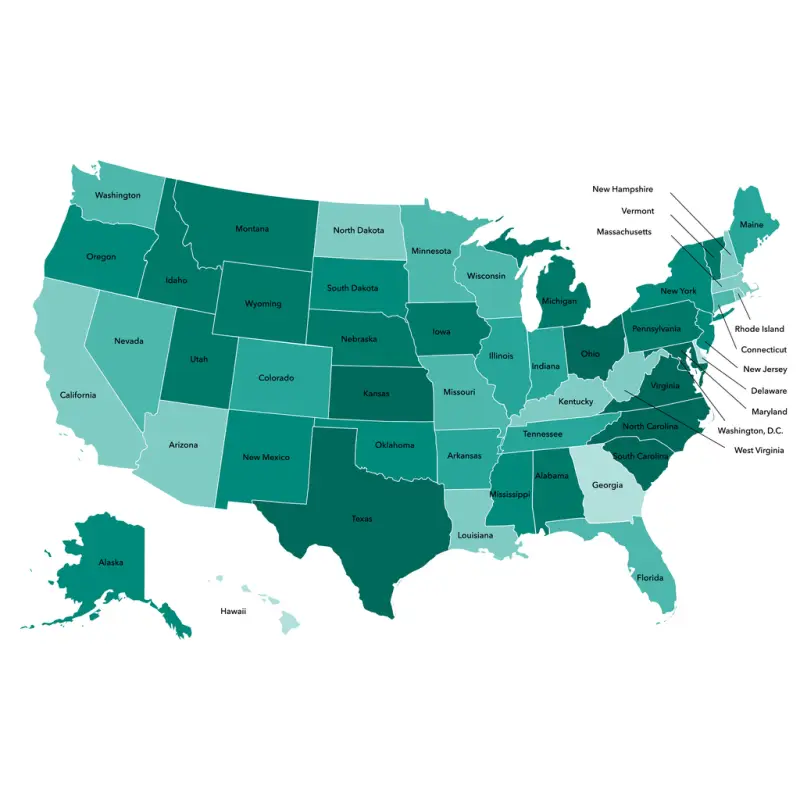
While the process involved in how to create a corporation is generally the same throughout the country, there are a few unique variations that you should be aware of in individual states.
Delaware
Unlike some states, Delaware does not have a publication requirement. When you calculate your franchise taxes, you can use the authorized shares method or the assumed par value method. For most startups, the assumed-par-value method will produce a lower tax. Because Delaware uses a Court of Chancery for disputes, you don’t have to deal with juries. Annual reports are due on March 1.
California
In the United States, California is one of the most complex places to start a corporation and carries a high compliance burden. Its minimum franchise tax of $800 is charged every year, including the year you form your company. After you form, you’ll need to submit your Statement of Information within 90 days. If you decide to register out of state instead, keep in mind you’ll need to register as a foreign corporation in California in order to operate there. Because of the high compliance burden involved, companies often incorporate in Delaware while registering in California as a foreign corporation.
New York
In New York, you must publish a notice of formation for six weeks in the county where you are based in two newspapers. Depending on what county you are in, this step can easily add $500 to $2,000+ to your total formation costs, with New York County being the most expensive. If you don’t fulfill this step, the corporation isn’t technically formed under New York law.
Texas
Texas does not charge a state corporate income tax, but it does impose a franchise tax if you make more than $2.65 million. As part of your compliance, remember to file a Public Information Report (PIR) or Ownership Information Report (OIR) by May 15. You’ll also need to pay a filing fee of $300. Because of its business-friendly environment and strong economy, Texas is a popular state for headquarters relocations.
Wyoming
Wyoming is known for its founder-friendly environment and privacy. It has a $100 filing fee and annual fees of just $60, making it an affordable option. Your annual report must be submitted on the first day of the month of your formation anniversary. Wyoming offers no state income tax, no franchise tax, and no public disclosure of directors or officers. With its reputation for fast online processing times as short as one day, Wyoming is rapidly gaining popularity among small businesses and startups.
After You Incorporate: Ongoing Corporate Compliance
Once you’ve finished forming a corporation, the next step is staying in compliance. If your corporation fails to maintain its compliance, it can result in the loss of your company’s good standing, fines, liability concerns, and even dissolution.
Annual Reports and Franchise Taxes
Each state has its own rules about annual reports and franchise taxes. While Delaware’s annual report is due on March 1, Nebraska requires biennial reports on April 1 in odd-numbered years. If you miss your filing date or fail to pay taxes, it can put you in bad standing and impact your corporate bank account. For example, corporations with international operations often work with global accounting firms to stay on top of these filing and tax obligations across jurisdictions.
Annual Board and Shareholder Meetings
Most states require an annual board meeting and an annual shareholder meeting. These must be documented in meeting minutes, although small corporations may use written consent.
Maintaining the Corporate Veil
Any of the following activities can pierce the corporate veil and make shareholders liable for the corporation’s activities:
- Mixing personal and business funds
- Not capitalizing the corporation enough
- Failing to document your major decisions
- Not holding your state’s required shareholder or board meetings
- Using the same bank account for personal and business purchases
Registered Agent Maintenance
If your registered agent relocates or resigns, you must update their information with the state. In most cases, updating a registered agent just involves filing a basic form with the Secretary of State.
Foreign Qualification in States Where You Operate
When you set up offices, conduct business, or hire employees in a new state, you must register as a foreign corporation in that state. Failing to do this can lead to back taxes and fines. Often, you will also be unable to sue or enforce contracts if you aren’t registered. With EntityCheck’s SOS Search, founders can verify that their corporation is properly registered in every state where they operate.
How Much Does It Cost to Form a Corporation?
The cost of setting up a corporation can vary significantly based on where you’re at and whether you hire a lawyer to assist with the formation process.
State Filing Fees
Corporate filing fees range from a low of $35 in Montana to $275 in Massachusetts for initial corporate filings and $300 in Texas. Timelines can also vary, with some states offering online, expedited, and same-day options. The following are just a handful of incorporation filing fees businesses must pay
|
Initial Filing Fees | |
|
California |
$125 (Articles of Incorporation and Statement of Information) |
|
Delaware | |
|
Massachusetts | |
|
Montana | |
|
Nevada |
$75, but it can be up to $35,000 depending on the number of authorized shares |
|
New York | |
|
Texas | |
|
Wyoming |
Registered Agent Fees
You have the option to serve as your own registered agent for $0. For privacy and convenience, many companies choose to hire a registered agent for $50 to $300 per year. Having a registered agent is a requirement in every state where you operate. If your corporation is registered out of state, you will have to hire someone else to serve as your registered agent.
Annual Maintenance Costs
Annual report fees, franchise taxes, foreign qualification fees, and other expenses can quickly add up. For example, while Delaware has fees of just $175, California has an $800 minimum franchise tax. Wyoming has one of the lowest overall rates, with an annual report fee of just $60. If you’re operating in multiple states, you’ll need to pay foreign qualification fees.
Attorney and Formation Service Fees
If you handle all of your formation services yourself when starting a corporation, then this cost is $0. In comparison, a formation service like ZenBusiness or LegalZoom will likely cost around $50 to $300. With an attorney, the total price can be between $500 and $2,000+. While single-founder C corps can go the DIY route, multi-founder startups and any business that wants to raise capital will likely need an attorney’s help.