Build Business Credit Fast: A Step-by-Step Guide
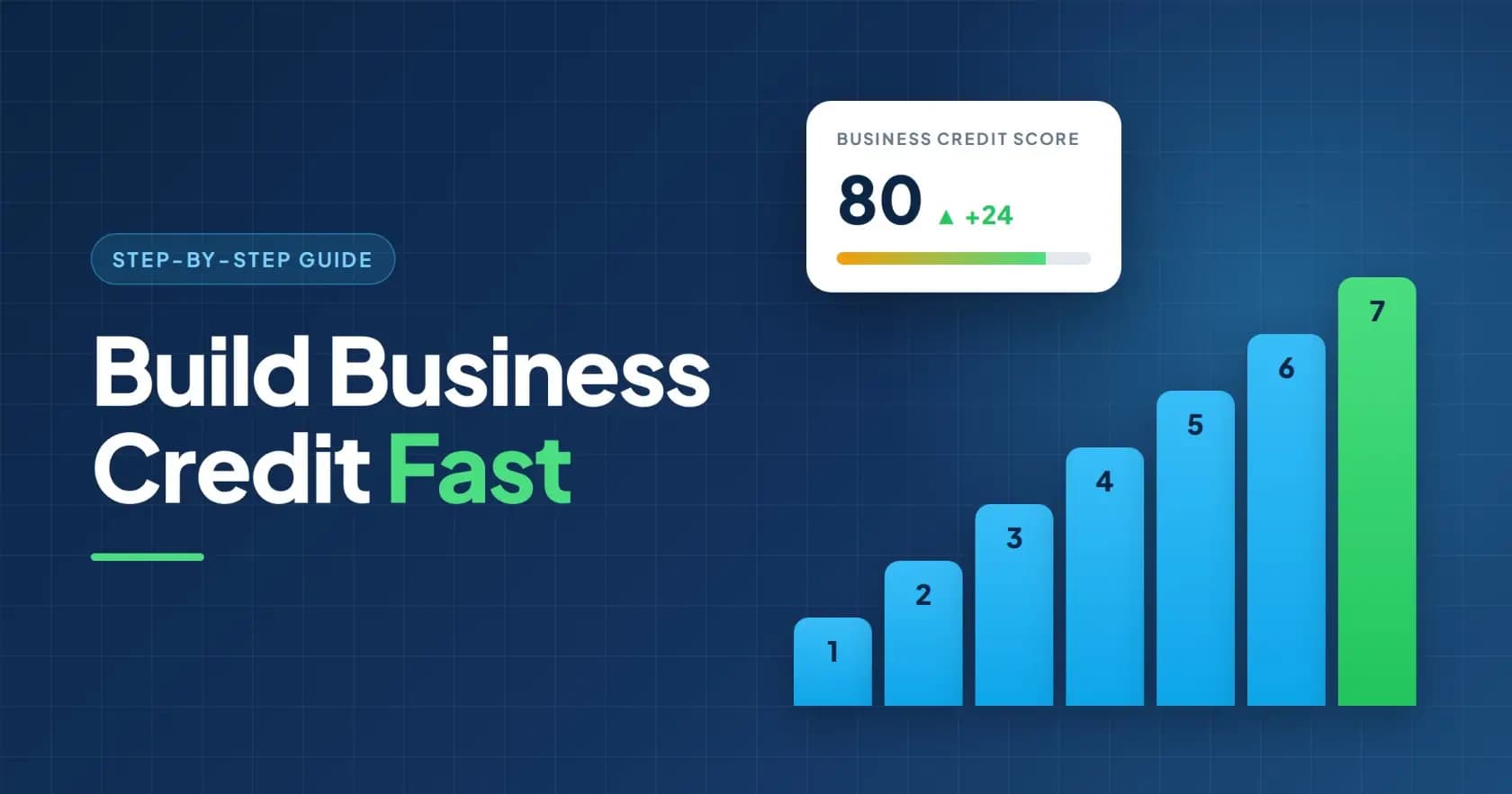
Most business owners overlook business credit until they need it. It’s a common step people miss when starting a company. To build business credit, founders must follow a specific sequence because skipping even one crucial step can slow down or block the next ones. With a proven plan, a business owner can build a solid foundation in their credit profile in roughly 30-90 days when following the steps in order.
A strong business credit profile not only illustrates your creditworthiness; it also provides access to credit options like loans, credit cards, lines of credit, commercial real estate loans, term loans, letters of credit, and tradelines. Your business credit score reflects how you manage your finances and how likely you are to pay lenders, vendors, and suppliers on time. Without good business credit, you may not have access to these options.
EntityCheck’s guide will help you learn how to build business credit, what the exact sequence of steps is, how each step builds on the last, and the common consistency mistake that can derail the process and how to avoid it.
Step 1: Register Your Business as a Legal Entity
Building business credit requires separating your personal finances from your company to establish a clean, credible financial track record. Once you do this, the main business credit bureaus (Dun & Bradstreet, Experian Business, and Equifax Business) can create a file for your company and calculate its risk score.
Business credit is tied to the business entity, not the owner’s Social Security number. Therefore, your first step is to register your company (LLC or corporation) with the state to legitimize your entity. When registering, use a dedicated business address (not a P.O. box) and a business phone number listed in public directories, since lenders and bureaus use these to verify your company. You must also have a registered agent to accept legal correspondence on the company’s behalf during normal business hours. Your registered agent must have a local address in the state where you register or are doing business.
Registering your business entity with the state is the most crucial step, and the rest of the process depends on it to build business credit.
Step 2: Get an EIN
Step two includes applying for an Employer Identification Number (EIN) through the Internal Revenue Service (IRS). An EIN is a unique nine-digit business identifier, much like a Social Security number for an individual. It serves as the business’s federal tax ID and can be used for various purposes, such as filing taxes, opening a business bank account, applying for loans, and establishing credit accounts. An EIN is free, and you obtain it directly from the IRS. You can apply online through the IRS website and get your EIN immediately, or apply by fax or mail. You can also get one from third-party sources, but they typically charge fees, while the IRS offers it for free. Keep your EIN confirmation letter (IRS Notice CP 575), as banks, vendors, and lenders may ask for it.
Step 3: Open a Business Bank Account
Once you have your EIN, the next step is to fully separate your business and personal finances. Banks, vendors, and partners expect this separation because it lends credibility to your organization.
Opening a business bank account (at least one) legally and financially separates your personal assets from your company funds. You will need an EIN to open a business bank account.
Some of the benefits of establishing a business bank account are:
- Legal Protection: Mixing personal and business money can put your personal liability protection at risk if your LLC or corporation faces a lawsuit. If the line between personal and business accounts is blurred, creditors or other plaintiffs could come after your personal assets.
- Professional Credibility: Clients and vendors feel more comfortable writing checks or sending payments to an official registered business with a business bank account rather than to an individual using their personal name and bank account.
- Simplified Taxes: Keeping transactions in one dedicated location makes it much easier to track expenses, deductions, calculate profit, and file taxes accurately. If you are ever audited, a business bank account makes the process much easier.
- Access to Financing: Banks usually require a business account before approving commercial loans, business credit cards, or merchant payment processing services.
- Better Cash Flow Tracking: Dedicated bank accounts provide a clear, organized overview of your company's financial health, income, and spending.
Step 4: Get a D-U-N-S Number
Next, establish your company with Dun & Bradstreet. You can request a free 9-digit business identifier online through the Dun & Bradstreet D-U-N-S application portal or by calling 1-866-705-5711. The key difference is that Dun & Bradstreet requires you to register, while Experian Business and Equifax Business usually create a file on their own once lenders or vendors start reporting your accounts. The free D-U-N-S option can take up to 30 business days, so apply early. Once you apply, respond quickly to any calls or emails from a Dun & Bradstreet representative who may reach out to verify your information or request additional details.
Information Needed
When registering for a D-U-N-S number, you will need to provide some key information such as:
- Business Name: Use the legally registered business name, including the corporate suffix (Corp, LLC, Inc., Co., etc.).
- DBA Names: Include any DBA (Doing Business As) names that you are registered to use.
- Address: The physical address of your business. If you have multiple locations, use your corporate headquarters.
- Phone Number: The official phone number your business uses for incoming calls.
- Business Structure: Your entity’s structure (LLC, corporation, partnership) as registered with the state.
- Owner Details: Name of the CEO, owner, or principal officer of the company.
- Number of Employees: Total number of employees (both full- and part-time).
Match the information above exactly with the data used everywhere else, or your D-U-N-S number may have trouble associating your business with credit accounts.
Benefits of A D-U-N-S Number
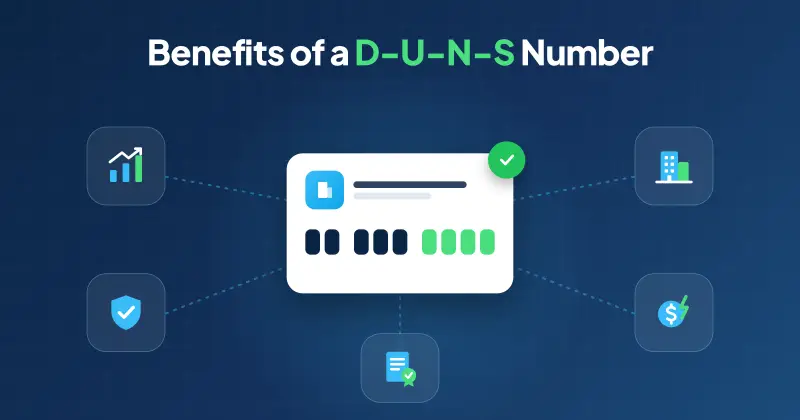
Establishing a D-U-N-S number provides many benefits such as:
- Build Business Credit: It separates your personal identity from your company, allowing you to build an independent business credit history.
- Proves Legitimacy: Lenders, suppliers, and investors use it to verify that your company is a real, active business.
- Unlocks Opportunities: Many large corporations require that you have a D-U-N-S number before onboarding you as a vendor.
- Speeds Up Funding: Financial institutions use your D&B profile to evaluate risk and expedite loan approvals.
- Helps With Grant and Contract Applications: Some private, foundation, and corporate programs still ask for a D-U-N-S number. Since April 2022, federal grants and contracts use the Unique Entity ID (UEI) from SAM.gov instead.
Step 5: Establish Trade Lines with Vendors
Establishing trade lines with vendors is one of the fastest ways to build business credit. It quickly provides your business with credibility, helping vendors and lenders trust you. Since the number one indication of risk is how you pay your bills, establishing credit lines and keeping them current proves you are creditworthy. So open accounts that report to credit bureaus to show how well you manage your business finances.
How to Build a Business Credit History
- Choose the Right Vendors: The key to building a business credit history is to identify a short list of starter vendors that offer net-30 or net-60 terms and report payment history to major business credit bureaus like Dun & Bradstreet, Experian, or Equifax. Startup-friendly vendors include Uline, Grainger, and Quill. Start with a couple of vendors and build from there.
- Apply for Credit: Fill out an application using your registered business name, address, and phone number that match your company registration and Dun & Bradstreet profile.
- Place Orders: Place a few initial orders. Meet any minimum order requirements (often $50 or more per purchase) so the vendor triggers the reporting process. Order regularly to build a credit history.
- Document Everything: Keep all purchase orders, confirmation numbers, and invoice receipts.
- Pay Early or On Time: Pay all of your invoices before the due date. Dun & Bradstreet’s PAYDEX score, for example, gives the highest scores for paying early, not just on time.
- Monitor and Confirm: It may take 60 to 90 days for the accounts to process and appear on your business credit reports. Check your profile frequently to ensure that the vendor reported your payment history. Follow up with the vendor if you fail to see any results after three months.
Step 6: Get a Business Credit Card
A business credit card helps build business credit by creating a separate financial track record that commercial credit bureaus use to measure your company's creditworthiness. Many card issuers report your account activity and payment history to business credit bureaus like Experian Business, Equifax Business, or the Small Business Financial Exchange (SBFE), though not all do. Most issuers also check your personal credit and require a personal guarantee, especially for a new business.
Making on-time payments creates positive credit and carries the most weight in building a strong business credit score.
Tips for Getting and Using a Business Credit Card
- Use Frequently: Use the card for routine expenses that you can easily pay off each month.
- Keep Balance Low: Paying down your balance keeps your credit utilization ratio low, which shows lenders you manage your finances responsibly.
- Pay Off Each Month: Pay the full statement balance each cycle. Do not carry balances if possible.
- Monitor for Fraud: Monitor the card for fraud and look for suspicious charges or balances you may be responsible for later.
- Verify: Wait about 60 days (two billing cycles) after you open the card before checking whether the company is reporting your credit usage to the credit bureaus. New tradeline data takes time to appear. If you are unsure, ask the card issuer which specific credit bureaus they report to, as not all cards report activity.
Step 7: Diversify With a Small Loan or Line of Credit
Another useful way to build business credit is a small loan or line of credit. These also establish a positive payment history that grows credibility with lenders. A micro-loan is often easier to qualify for than larger financing, and repaying it adds more positive credit history.
A healthy credit mix also helps round out your credit profile. When you open a loan or line of credit, it creates a "tradeline" (an active credit account) in your business's name linked to your employer identification number. Lenders report your account activity, such as your credit limit, current balance, and payment habits, to major commercial credit bureaus like Experian, Equifax, Dun & Bradstreet, or the Small Business Financial Exchange (SBFE).
Consistent, on-time payments demonstrate financial reliability, which raises your business credit scores. A revolving line of credit shows you can successfully borrow, repay, and reuse funds responsibly, proving long-term financial stability.
Tips When Taking Out a Small Loan or LOC
- Verify Credit Reporting: Always ask your lender upfront if they report payment activity to major business credit bureaus. Not all small lenders or local banks automatically report.
- Keep Balances Low: For lines of credit, keep your credit utilization ratio low (using only a small percentage of your total available limit) to protect and boost your score.
- Pay Early or On Time: Pay your installments or draw balances well before the due date. Commercial scoring models often reward payments made significantly ahead of time.
- Separate Finances: Keep your loan tied strictly to your legal business entity using your EIN and a dedicated business checking account, not your personalSocial Security number or personal bank accounts.
The Consistency Mistake That Quietly Blocks Approvals
Even if you do everything right to build business credit, you can still get tripped up by this single mistake that many owners make. Consistency is key. Make sure your business name, address, and other details match across your state filing, employer identification number, D-U-N-S registration, and vendor applications. Even a small misspelling or missing suffix can lead to delays or rejections. Credit bureaus cross-check against official records, and if they find a mismatch, they may reject your application.
To ensure success when building business credit, always use EntityCheck’s Secretary of State Business Search to confirm that your entity’s official state filing matches everything else before registering with Dun & Bradstreet or applying for loans or credit.